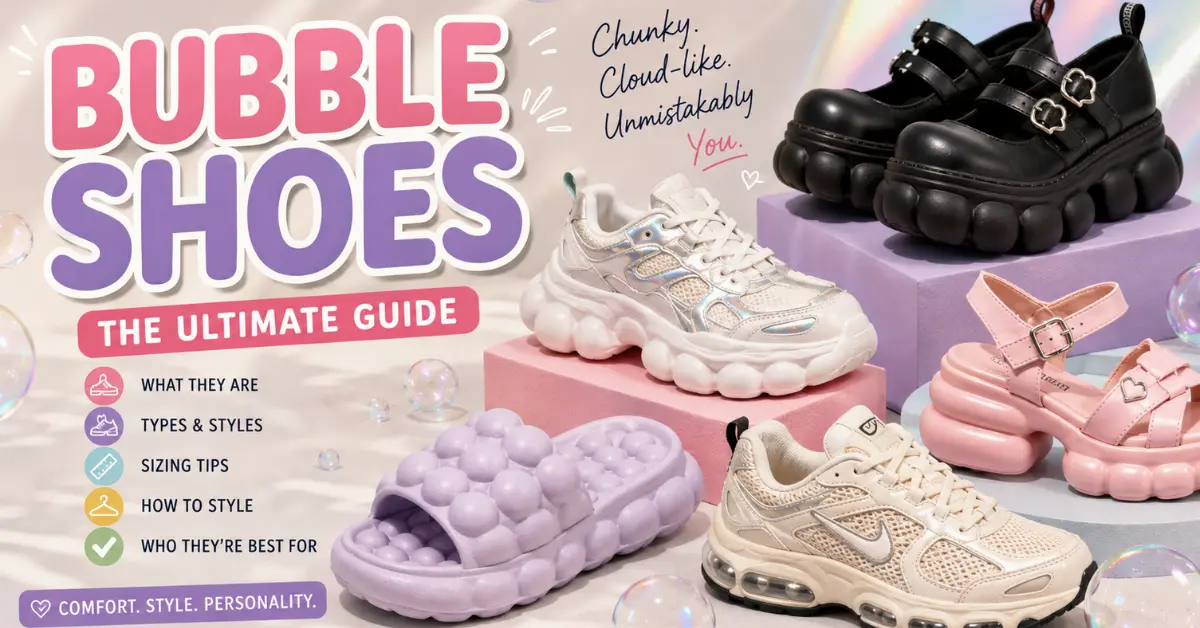
If you’ve spotted chunky, cloud-like footwear taking over social media and wondered what’s going on — welcome to the world of bubble shoes. Whether you’re a complete beginner or just trying to figure out which pair is right for you, this guide covers everything: what bubble shoes actually are, the different types available, how to style them, how to pick the right size, and who they’re really best for.
No fluff. Just the answers you’re actually looking for.
What Are Bubble Shoes?
Bubble shoes are footwear designed with a distinctly puffy, rounded, or “inflated” aesthetic. The name comes from how they look — the soles, uppers, or straps appear to be made of round, balloon-like segments that give the shoe its signature bubbly silhouette.
But here’s the thing: “bubble shoes” isn’t one single product. It’s a broad category that includes several very different styles, all sharing that same visual language of softness and roundness. Depending on where you shop and what you’re looking for, you might find:
- EVA foam bubble slides — lightweight recovery sandals with a bubbly footbed and strap
- Bubble platform trainers — chunky sneakers with puffy, cloud-like midsoles
- Bubble platform heels — fashion-forward shoes with rounded, stacked soles (popularized by alt-fashion brands)
- Bubble athletic sneakers — sport-inspired shoes like Nike’s Air Max “Big Bubble” line with visible air units
Each type has a different purpose, feel, and price point — which is why it’s worth knowing the difference before you buy.
A Brief History of Bubble Shoes
The bubble aesthetic in footwear isn’t entirely new. You can trace its roots back to the 1990s, when Nike launched the Air Max 95 and later played with exaggerated visible air bubbles in its soles. The idea was functional: cushioning and impact absorption, made visible as a design statement.
The modern bubble shoe trend is something slightly different. It grew out of two separate movements colliding: the rise of EVA foam recovery footwear (think Crocs, cloud slides, and post-workout sandals) and the fashion world’s ongoing obsession with maximalist, retro-inflected silhouettes.
By the early 2020s, bubbly, puffy soles were appearing on mainstream runways, indie fashion brands, and TikTok feeds simultaneously. The “ugly-but-comfortable” aesthetic — sometimes called “gorpcore” or “normcore” — made bubble shoes suddenly desirable rather than dorky. And that shift stuck.
The Main Types of Bubble Shoes Explained
1. EVA Foam Bubble Slides (Recovery Slides)
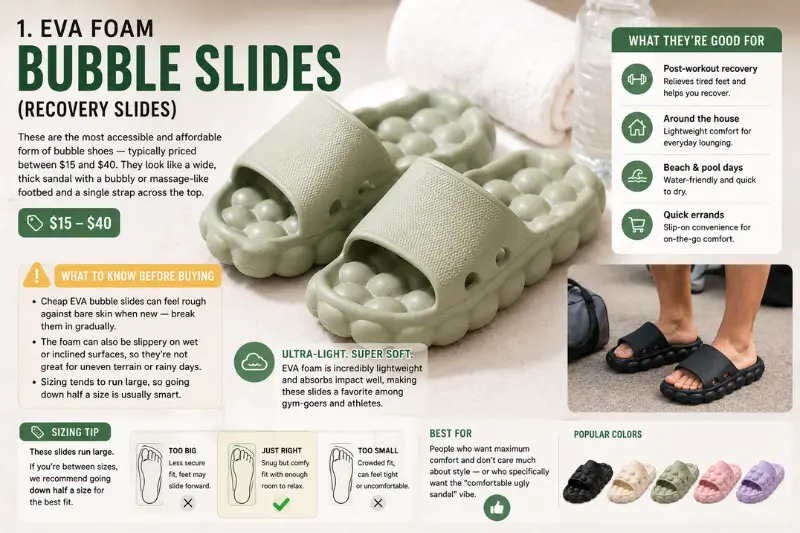
These are the most accessible and affordable form of bubble shoes — typically priced between $15 and $40. They look like a wide, thick sandal with a bubbly or massage-like footbed and a single strap across the top.
What they’re good for: Post-workout recovery, around the house, beach and pool days, quick errands. The EVA foam is incredibly lightweight and absorbs impact well, which makes them popular with gym-goers and athletes.
What to know before buying: Cheap EVA bubble slides can feel rough against bare skin when new — break them in gradually. The foam can also be slippery on wet or inclined surfaces, so they’re not great for uneven terrain or rainy days. Sizing tends to run large, so going down half a size is usually smart.
Best for: People who want maximum comfort and don’t care much about style — or who specifically want the “comfortable ugly sandal” vibe.
2. Bubble Platform Trainers (Chunky Sneakers)
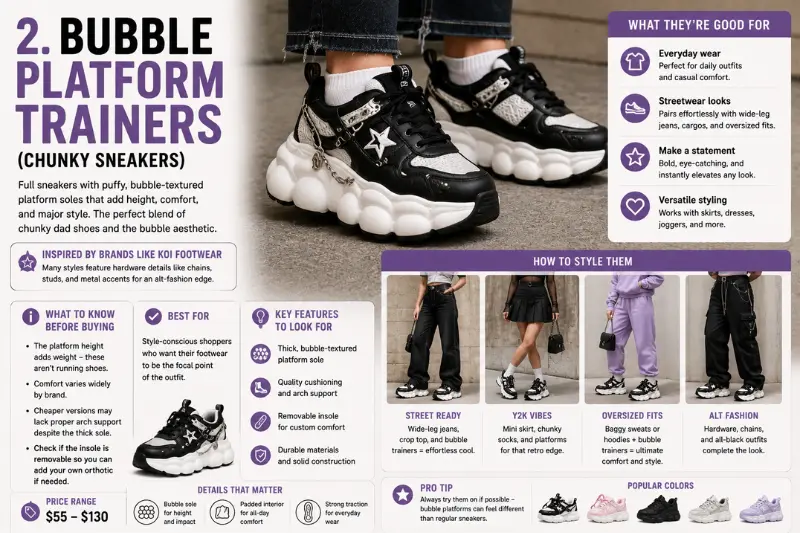
These are full sneakers with an exaggerated, often bubble-textured or puffy midsole that gives them serious height and visual impact. Think of them as the intersection of the chunky dad shoe trend and the bubble aesthetic.
Brands like KOI Footwear have leaned into this category with styles that mix bubble soles with platform heights, sometimes adding hardware like chains or studs for an alt-fashion edge.
What they’re good for: Everyday casual wear, streetwear outfits, making a visual statement. They pair easily with wide-leg jeans, mini skirts, or oversized fits.
What to know before buying: The platform height adds weight — these aren’t running shoes. Comfort varies widely by brand. Cheaper versions may have poor arch support despite the thick sole. Always check if the insole is removable, as adding your own orthotic can make a significant difference.
Best for: Style-conscious shoppers who want their footwear to be a focal point of the outfit.
3. Bubble Platform Heels (Fashion Platforms)
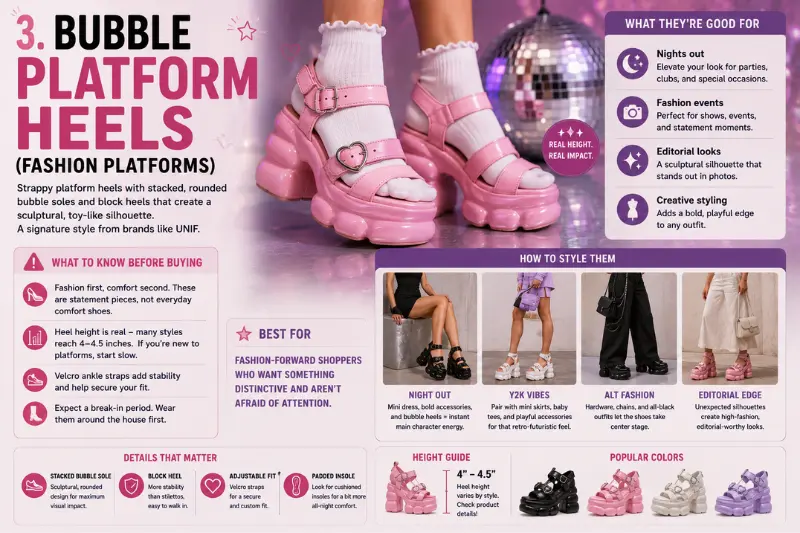
This is where bubble shoes enter full-blown fashion territory. Brands like UNIF have designed strappy platform shoes with stacked, rounded block heels that create an almost toy-like, sculptural look.
What they’re good for: Nights out, fashion events, editorial looks, creative styling.
What to know before buying: These are fashion items first, comfort items second. The heel height is real (some styles reach 4–4.5 inches), so if you’re not experienced walking in platforms, start slow. Velcro ankle straps, which appear on several popular styles, add stability.
Best for: Fashion-forward shoppers who want something genuinely distinctive and aren’t afraid of attention.
4. Bubble Athletic Sneakers (Heritage Performance)
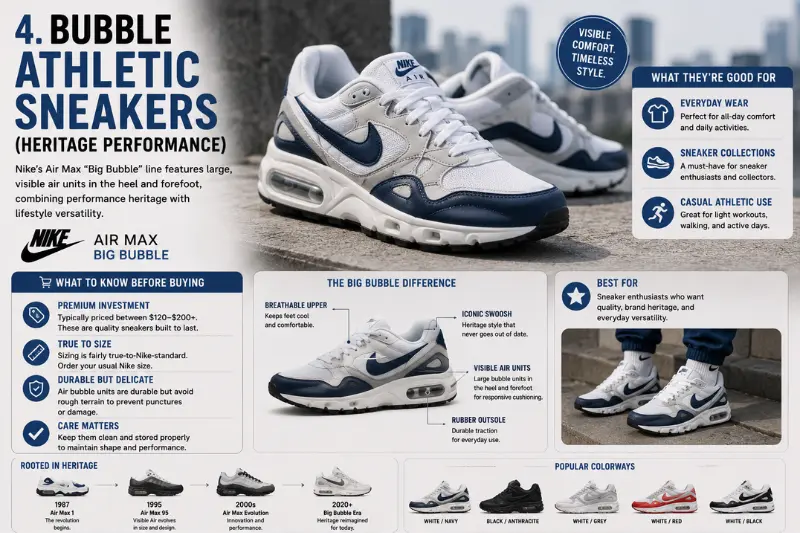
Nike’s Air Max “Big Bubble” line sits in this category — sneakers with large, visible air bubble units in the heel and forefoot. These are performance-heritage shoes: rooted in athletic history, but worn primarily as lifestyle sneakers today.
What they’re good for: Everyday wear, sneaker collections, casual athletic use.
What to know before buying: These typically run $120–$200+, so they’re a genuine investment. Sizing is fairly true-to-Nike-standard. The bubble units are durable but should be avoided on rough terrain to prevent puncture.
Best for: Sneaker enthusiasts who want quality, brand heritage, and everyday versatility.
How to Choose the Right Bubble Shoes for You
With so many styles available, it helps to think about a few key questions before choosing:
What’s the primary use case?
Recovery and comfort after sport → EVA foam slides. Everyday casual wear → bubble platform trainers. Night out or fashion event → bubble platform heels. Sneaker collection → bubble athletic trainers.
What’s your budget?
Bubble shoes span a huge price range. EVA foam slides: $15–$40. Platform trainers: $55–$130. Fashion platforms: $70–$130. Heritage athletic sneakers: $120–$200+.
What’s your aesthetic?
Minimalist or athleisure → stick with EVA slides or heritage sneakers in neutral colors. Alt, edgy, or maximalist → look at chunky platform trainers with hardware. Playful or Y2K-inspired → bubble platform heels or colorful chunky trainers.
Do you have specific foot concerns?
If you have flat arches, plantar fasciitis, or general foot pain, thick-soled bubble shoes can help — but not all are created equal. Look for styles with defined arch support in the insole, not just a thick slab of foam. Removable insoles are a plus because they let you swap in custom orthotics.
How to Style Bubble Shoes
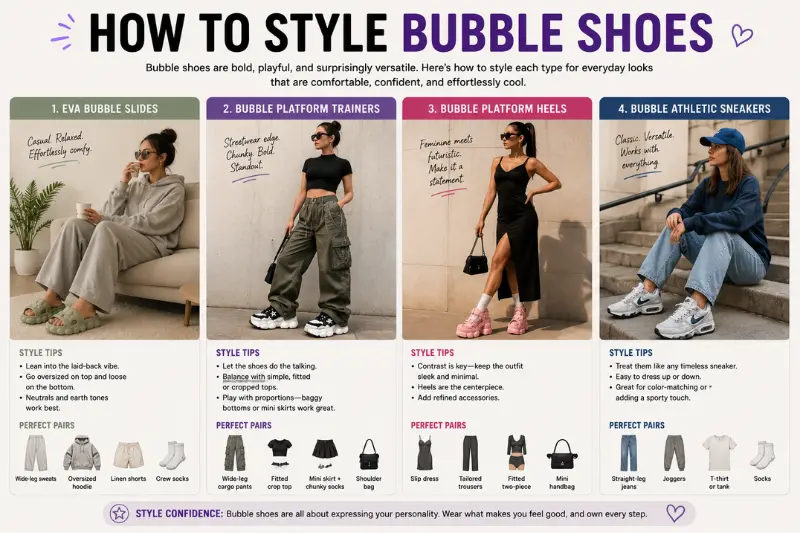
One of the things that makes bubble shoes interesting is how versatile they are once you embrace the aesthetic. Here’s how different styles actually work in real outfits:
EVA Bubble Slides
These look best when you lean into the casual, intentionally-relaxed vibe. Pair them with wide-leg sweats, an oversized hoodie, or linen shorts. The “model off-duty” look works particularly well here — simple basics, then the slides as a statement of deliberate comfort.
Bubble Platform Trainers
These do most of the work aesthetically, so keep the rest of the outfit relatively simple. Wide-leg cargo pants, a fitted crop top, and bubble platform trainers is a complete look. Mini skirts with chunky socks also work well. Avoid tight trousers that compete with the visual weight of the shoe.
Bubble Platform Heels
Contrast is your friend here. The sculptural quality of a bubble platform heel looks strongest against something sleek — a slip dress, tailored trousers, or a fitted two-piece. Let the shoes be the statement.
Bubble Athletic Sneakers
These are the most versatile type and work with almost anything. Treat them like any quality sneaker: jeans, joggers, dresses, shorts. Their inherent brand cachet means they don’t need much styling support.
Sizing Tips for Bubble Shoes
Sizing varies significantly depending on the style:
EVA Foam Slides: These almost universally run large. Go down a full size if you’re between sizes, or half a size if you want a snug fit. Look for reviews that specifically mention sizing — the gap between stated size and actual fit can be significant with generic brands.
Bubble Platform Trainers: Most reputable brands size these true-to-standard. However, if the shoe has a narrower toe box (common in fashion-forward styles), going up half a size can prevent discomfort on longer walks.
Bubble Platform Heels: Sizing tends to be accurate for brands like UNIF and KOI, but strappy styles can run narrow. If you have a wider foot, look for styles with adjustable straps.
Bubble Athletic Sneakers: Nike sizing is fairly consistent. If you’re a standard Nike wearer, go with your usual size. If you’re new to the brand, Nike’s Air Max line tends to run slightly long — consider going half a size down.
Are Bubble Shoes Actually Comfortable?
This is the most common question, and the honest answer is: it depends entirely on which type you buy.
EVA foam bubble slides — genuinely among the most comfortable casual footwear available. The foam is soft, the footbed conforms slightly over time, and the lightweight construction reduces fatigue. The main comfort drawbacks are a lack of lateral stability and the roughness of new foam against skin.
Bubble platform trainers — comfort varies hugely by brand and price. Higher-end options from established footwear brands invest in proper insoles and supportive construction. Budget versions often sacrifice support for aesthetics. A thick sole doesn’t automatically mean good cushioning.
Bubble platform heels — less comfortable than flat styles by nature, but no worse than other heeled platform shoes of the same height. The block-style sole found on most bubble heels is actually more stable than a stiletto. For events where you’ll be standing for hours, bring a backup pair.
Bubble athletic sneakers — typically very comfortable, especially Nike’s Air Max line, where the visible air unit provides genuine cushioning. These are among the most comfortable styles in the category.
What to Look for in a Quality Pair
Whether you’re spending $20 or $200, a few markers separate a well-made bubble shoe from a cheap one:
Sole quality: Squeeze it. Good EVA foam springs back quickly; poor-quality foam stays compressed for a moment. For platform trainers, check that the sole is evenly colored and free of visible glue gaps at the edges.
Stitching and bonding: On strapped styles, tug the strap firmly. It shouldn’t flex away from the sole or show stress at the attachment point. Poor bonding here is the most common failure point in budget bubble shoes.
Insole: Remove it and check the shape. A flat, unsupported insole in a thick-soled shoe won’t give you the arch support you might expect. An anatomically shaped insole is a good sign of quality.
Material consistency: The “bubbles” on budget shoes often show inconsistent texture or shallow definition. Higher-quality versions have uniform, clearly defined bubble segments throughout.
Frequently Asked Questions
Are bubble shoes waterproof?
EVA foam slides are water-resistant and fine for pool or beach use, but the foam can absorb water over time if submerged. Most fabric or leather bubble trainers are not waterproof. Look for styles specifically marketed as water-resistant if that matters to you.
How do I clean bubble shoes?
EVA foam slides: rinse with water and mild soap, dry in shade (direct sun can warp the foam). Fabric bubble trainers: remove insoles, hand wash or machine wash on a gentle cold cycle, air dry. Never put bubble shoes in a dryer.
Do bubble shoes offer good arch support?
Generally, no — not without modification. The thick soles can feel cushioned without actually supporting the arch. If you have flat feet or need orthotic support, choose a style with a removable insole so you can swap in your own support.
How long do bubble shoes last?
EVA foam degrades over time — budget slides may flatten noticeably within 6–12 months of regular use. Higher-quality foam and premium construction can extend that to 2–3 years. Platform trainers and athletic sneakers typically last 1–2 years with regular wear.
Can you wear bubble shoes in winter?
Bubble slides are not suitable for cold or wet weather. Closed-toe bubble platform trainers and sneakers can be worn year-round — just check that the sole offers adequate grip on wet surfaces.
Conclusion
Bubble shoes have earned their place beyond trend status — they offer something genuinely useful at every price point, from ultra-comfortable recovery slides to fashion-forward platforms that can anchor an entire outfit. The key is knowing which type you’re buying and what to expect from it.
If you’re after comfort above all, start with EVA foam slides and don’t overspend. If you want something that does double duty as a style statement and a wearable shoe, bubble platform trainers in the $60–$100 range are a solid sweet spot. And if you’re ready to fully commit to the aesthetic, a fashion platform or a pair of heritage athletic sneakers with visible bubble units can be some of the most satisfying footwear you own.
The trend got popular for a reason. Comfort, personality, and a little bit of playfulness — that combination doesn’t go out of style.