Search “best lip balm” and you will get dozens of lists recommending the same handful of drugstore tubes and luxury pots. What almost none of them explain is why lips chap in the first place, which ingredients actually heal versus temporarily coat, or why some people feel like they need to reapply balm every twenty minutes just to function.
This guide fills those gaps. Instead of another generic ranking, it walks through the science of dry lips, breaks down what to look for by specific condition, and covers the application habits that determine whether a balm actually works.
Why Lips Chap in the First Place
Lips dry out faster than the rest of your face for a simple biological reason. The skin on your lips is much thinner than facial skin, and it has no oil glands and almost no sweat glands. That means lips cannot produce their own natural moisture barrier the way the rest of your face does.
Lips also have far less melanin than surrounding skin, which offers less natural protection from sun exposure. Combine thin skin, no oil production, and low UV protection, and you get a body part that is constantly losing moisture to the air, especially in wind, cold, or dry indoor heat.
This is why a good lip balm needs to do two separate jobs: seal in existing moisture and actively repair the skin barrier. Most balms only do the first one.
Ingredients That Actually Heal vs. Ingredients That Just Coat
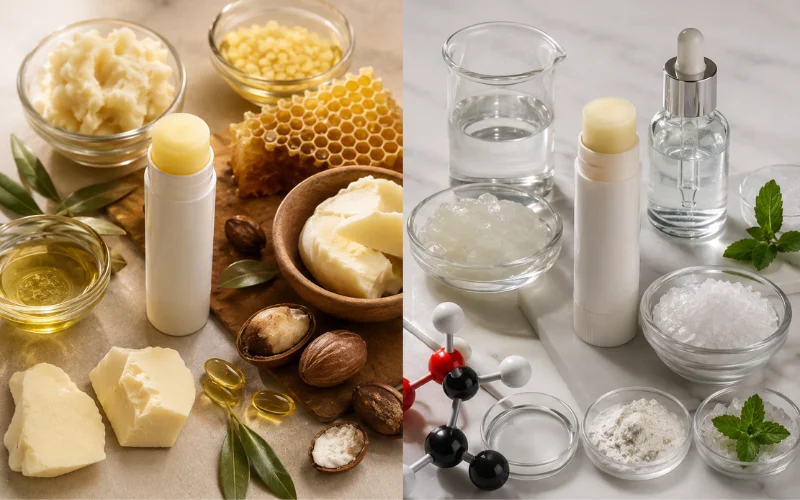
Not all lip balm ingredients work the same way, and this is where most buying guides stay vague.
Ingredients worth looking for:
- Shea butter and cocoa butter, which contain fatty acids that support the skin’s natural barrier rather than just sitting on top of it
- Ceramides, which help rebuild the lipid layer that keeps moisture locked in
- Hyaluronic acid, which draws water into the skin rather than only blocking it from escaping
- Beeswax or plant-based waxes, which create a protective seal without clogging the delicate lip skin
- Vitamin E, which supports repair and offers mild antioxidant protection
Ingredients that can work against you:
- Mineral oil and petroleum-heavy formulas, which seal moisture in temporarily but do little to repair the underlying barrier, meaning the relief often fades quickly
- Synthetic fragrance and flavor, common irritants that can cause a mild allergic reaction that mimics chronic dryness
- Menthol, camphor, and phenol, ingredients that create a cooling or tingling sensation but can actually dry out lips further with repeated use
- Salicylic acid in high concentrations, which exfoliates but can be too harsh for already cracked or bleeding lips
If a balm feels good for a moment but leaves you reaching for it again within the hour, check the ingredient list. That cycle is often a sign the formula is masking dryness rather than healing it.
The Lip Balm Dependency Question
A lot of people quietly wonder if they have become “addicted” to lip balm, and the honest answer is more about ingredients than willpower. Balms containing menthol, camphor, or phenol create a brief tingling or plumping sensation that feels soothing at first, but that same ingredient can slightly irritate the skin barrier over time. The result is a cycle where lips feel dry faster, prompting more frequent reapplication.
Switching to a barrier-repairing formula, one built around ceramides, shea butter, or hyaluronic acid instead of tingling agents, is usually the fastest way to break that cycle. Most people notice they need to reapply less often within one to two weeks of making the switch.
The Best Lip Balm by Specific Situation
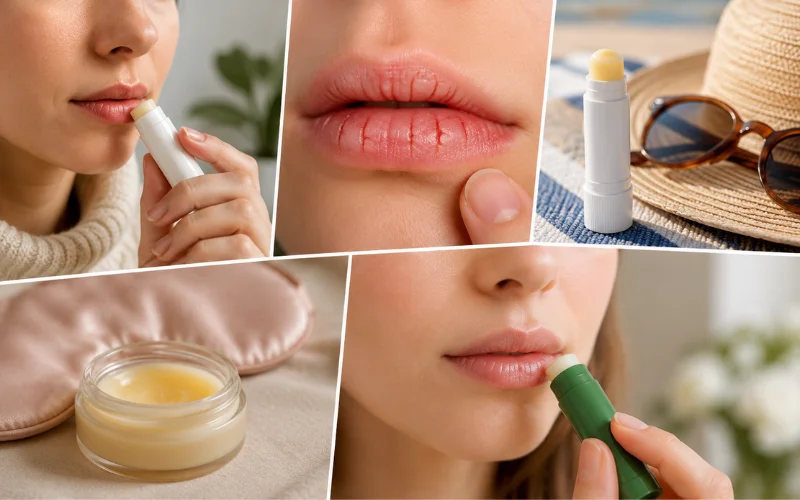
Instead of one universal “best,” here is how to choose based on what your lips actually need.
For daily maintenance
Look for a lightweight formula with shea butter, beeswax, and vitamin E. You want something you can apply once or twice a day without it feeling heavy or greasy under makeup.
For severely cracked or bleeding lips
Prioritize ceramide-based or medical-grade healing balms, and avoid anything with menthol, fragrance, or exfoliating acids until the skin barrier recovers. Thicker, ointment-style textures tend to outperform lighter sticks in this situation because they create a stronger protective seal overnight.
For sun exposure
Choose a balm with broad-spectrum SPF 15 or higher, since lips burn easily and rarely get sunscreen applied to them the way the rest of the face does. Reapply every two hours during extended outdoor time, the same rule that applies to skin sunscreen.
For overnight repair
Thicker balms or lip masks with occlusive ingredients like shea butter or petrolatum work best applied right before bed, since they have hours of uninterrupted contact time to repair the barrier without makeup or talking disrupting the seal.
For sensitive or reactive lips
Stick to short ingredient lists with no added fragrance, flavor, or menthol. Fewer ingredients mean fewer chances for irritation, which matters most for people who react easily.
How to Apply Lip Balm the Right Way
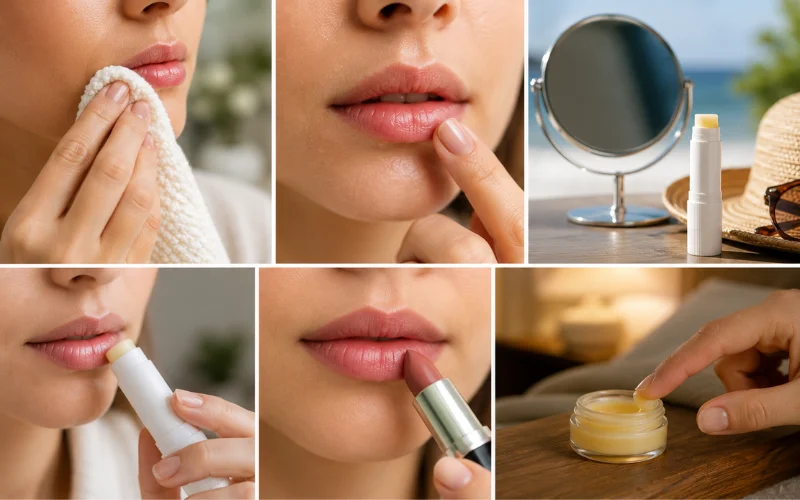
Almost no buying guide covers this, even though technique matters as much as the product itself.
Exfoliate gently once or twice a week
A soft toothbrush or a damp washcloth removes flaking skin so balm can actually absorb instead of sitting on top of dead cells.
Apply to slightly damp lips
Balm seals in moisture more effectively when there is already some water present to lock in, similar to how moisturizer works better on damp skin.
Reapply based on exposure, not habit
Reapplying every few minutes out of anxious habit can interrupt the skin’s own repair process. Reapply when lips actually feel dry, or proactively before wind, cold, or sun exposure.
Layer balm under lipstick, not after
Applying balm first creates a smoother base and prevents matte lipsticks from settling into cracks.
Use a thicker layer at night
Since you are not eating, drinking, or talking for hours, nighttime application gets far more uninterrupted contact time to work.
Price-Per-Use: Are Expensive Lip Balms Worth It?
Lip balm prices span an enormous range, from around four dollars to nearly fifty, and price alone does not predict effectiveness. What actually matters is formula and how much product you use per application.
- Budget balms ($4 to $10) often rely on petroleum or wax-based formulas that work fine for mild, daily dryness but may need frequent reapplication.
- Mid-range balms ($12 to $25) more often include active repair ingredients like ceramides or hyaluronic acid, which can mean fewer applications needed per day.
- Luxury balms ($30 and up) sometimes justify their price with concentrated actives or added SPF, but a portion of the cost reflects packaging and branding rather than formulation.
The most cost-effective approach is matching the ingredient list to your actual need rather than assuming a higher price guarantees better results. A well-formulated ten-dollar balm can easily outperform an expensive one if the cheaper option matches your specific dryness type.
Frequently Asked Questions About best lip balm
1. What is the best lip balm for extremely chapped lips?
The best lip balm for severely chapped lips usually contains ceramides or uses an ointment-style formula without menthol or added fragrance. A barrier-repairing best lip balm helps heal cracked lips better than lightweight sticks.
2. Can best lip balm actually make your lips more dependent on it?
Yes, in some cases. Some best lip balm products contain ingredients like menthol or camphor that create temporary relief but may irritate the lips, leading to more frequent reapplication.
3. Is petroleum jelly a good ingredient in the best lip balm?
Petroleum jelly is a common ingredient in the best lip balm because it seals in moisture effectively. However, it does not actively repair the skin barrier, so pairing it with nourishing ingredients often delivers better long-term results.
4. How often should you reapply the best lip balm?
You should reapply the best lip balm whenever your lips begin to feel dry or before exposure to cold weather, wind, or strong sunlight instead of following a strict schedule.
5. Does best lip balm with SPF actually protect against sunburn?
Yes. The best lip balm with broad-spectrum SPF 15 or higher helps protect the delicate skin on your lips from UV damage and sunburn.
6. Are expensive products always the best lip balm?
Not necessarily. The best lip balm is the one with ingredients that match your needs. An affordable, well-formulated lip balm can perform just as well—or even better—than a premium product.
7. What ingredients should sensitive lips avoid when choosing the best lip balm?
When choosing the best lip balm, people with sensitive lips should avoid fragrance, artificial flavors, and menthol. Simpler ingredient lists are often more suitable for easily irritated lips.
8. Should you exfoliate your lips before applying the best lip balm?
Yes. Gentle exfoliation once or twice a week helps the best lip balm absorb more effectively by removing flaky, dead skin cells.
9. Is it better to apply the best lip balm on wet or dry lips?
For the best results, apply the best lip balm to slightly damp lips. This helps lock in moisture and keeps lips hydrated for longer.
10. What is the best lip balm to use overnight?
The best lip balm for overnight use is a thick, occlusive formula containing ingredients such as shea butter or petrolatum. A rich best lip balm creates a protective barrier that supports deep hydration and repair while you sleep.
Final Thoughts
The best lip balm is not a single product, it is the one that matches your specific dryness, your ingredient sensitivities, and how you actually apply it. Understanding why lips chap, learning to read an ingredient list, and building better application habits will do more for your lips than switching brands every few months ever will.