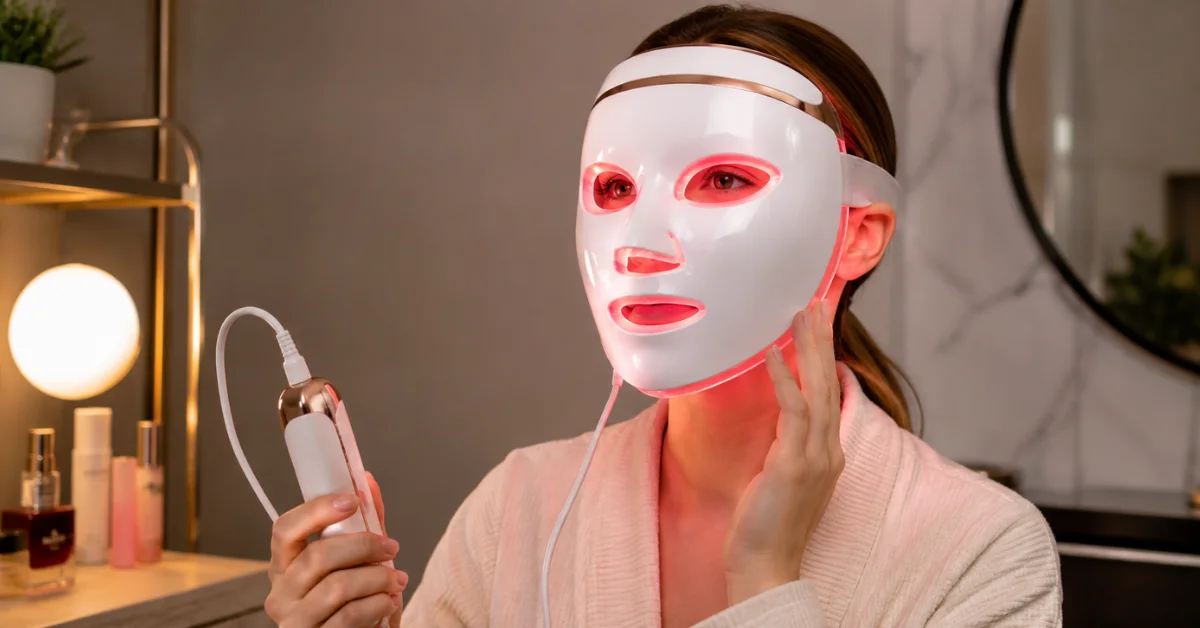
A Shark LED face mask is an at-home skincare device that combines red, blue, and deep infrared light with built-in cooling technology to target fine lines, acne, and under-eye puffiness in one device. It works by delivering specific light wavelengths into the skin — red and infrared to stimulate collagen and calm inflammation, blue to reduce acne-causing bacteria — while chill pads around the eye area help de-puff and tighten through temporary vasoconstriction.
Most people see visible smoothing or clearer skin within four to eight weeks of consistent daily use, which is also the timeframe the brand recommends for committing to a single treatment mode before switching. If you’re deciding whether a Shark LED face mask is worth adding to your routine, the short answer is: yes, if you’re willing to wear it daily for at least two months and you don’t have a light-sensitivity condition or are on a photosensitizing medication — in which case you should check with a dermatologist first.
The rest of this guide breaks down exactly how the Shark LED face mask works, why consistency matters more than intensity, how to choose the right mode for your skin goals, and what no other review covers in detail: realistic week-by-week expectations and who should be cautious before using one.
Why the Shark LED Face Mask Works the Way It Does
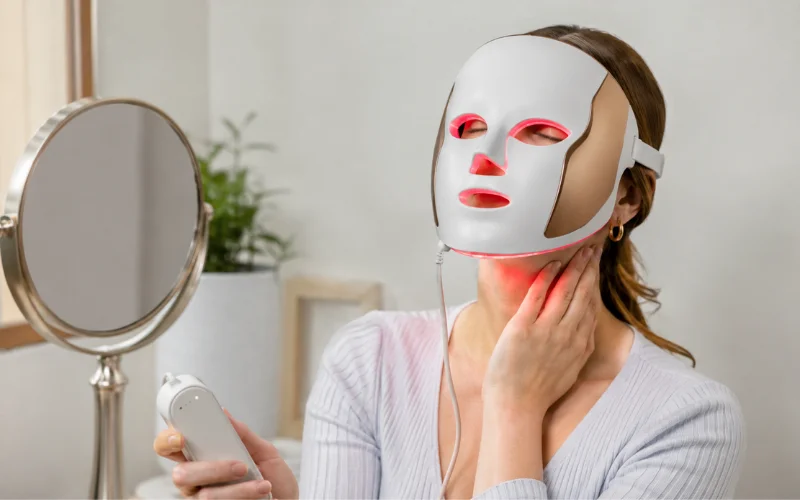
LED light therapy isn’t a new concept — it’s been used in dermatology clinics for years — but understanding the mechanism behind a Shark LED face mask helps explain why results take weeks, not days.
Each wavelength of light penetrates the skin to a different depth and triggers a different cellular response:
- Red light (around 630nm) penetrates into the dermis and stimulates fibroblast activity, which is what produces collagen. This is why red-light treatments are positioned for fine lines and firmness rather than fast fixes.
- Deep infrared light (around 830nm) goes even deeper than red light, improving circulation and reducing inflammation, which supports the skin’s natural repair process.
- Blue light (around 415nm) works at a more surface level, targeting the bacteria that contribute to acne breakouts without drying out the skin the way topical treatments sometimes do.
- Cooling chill pads placed around the eyes use temperature, not light, to constrict blood vessels temporarily, which is what causes the immediate de-puffing effect many users notice right after a session.
This is also why the brand recommends sticking to one mode for six to eight weeks rather than rotating daily: collagen remodeling and bacterial reduction are gradual processes, and switching treatments too often interrupts the cumulative effect before it has time to show.
How to Use a Shark LED Face Mask: Step-by-Step
Getting consistent results from a Shark LED face mask comes down to following the same sequence every session rather than guessing at settings:
Cleanse skin completely

Any leftover makeup, sunscreen, or oil can block light penetration, so start with a clean, dry face.
Skip active ingredients beforehand

Avoid applying retinoids, exfoliating acids, or vitamin C serums right before your session, since these can increase skin sensitivity to light exposure.
Choose one treatment mode and commit to it
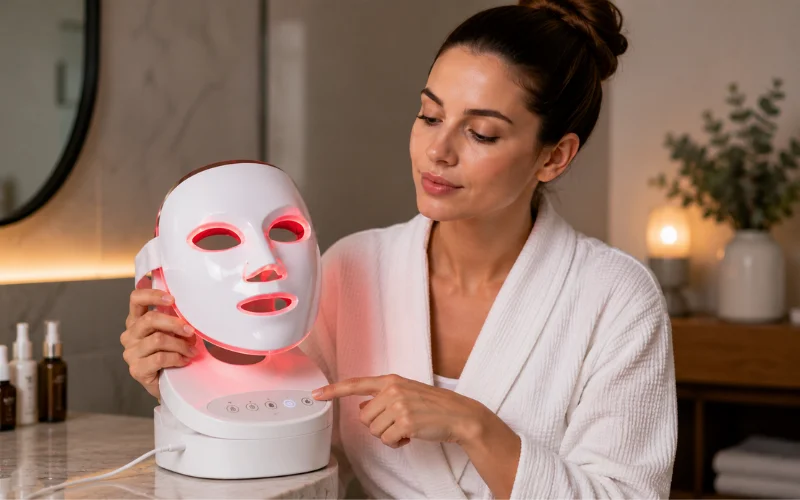
Pick either the anti-aging (red/infrared) or skin-clearing (blue/red/infrared) mode based on your primary concern, and stay with that mode for the full six-to-eight-week cycle.
Adjust the chill setting to your comfort level
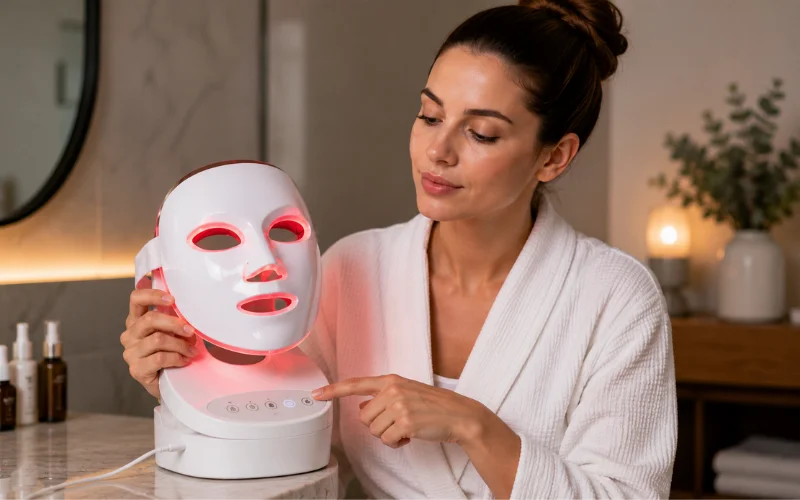
If you experience puffiness more than fine lines, increase the cooling intensity; if your main concern is firmness, a lower chill setting lets you focus on light exposure time instead.
Use it at the same time daily

Many users find an evening routine easier to stick to, since skin is clean and the session doubles as a wind-down ritual.
Apply moisturizer or serum afterward, not before
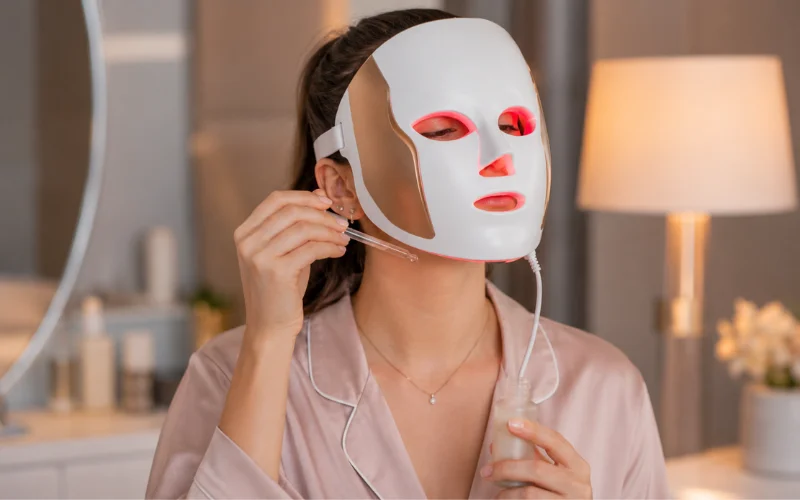
Hydrating actives absorb better immediately after a light therapy session since the skin’s surface is warm and slightly more receptive.
What to Expect Week by Week
Most reviews talk about an “eight-week cycle” as one block, but realistic expectations change quite a bit within that window:
- Weeks 1–2: Skin may look slightly more hydrated and calm after sessions, but visible changes to fine lines or breakouts are minimal. This is normal — the cellular response from light therapy takes time to compound.
- Weeks 3–4: Many users start noticing less inflamed breakouts (with blue light modes) or slightly smoother texture (with red light modes). Under-eye puffiness from the chill pads tends to be noticeable from the very first session.
- Weeks 5–6: This is typically when collagen-related improvements become more visible — fine lines look softer, and skin tone starts to even out.
- Weeks 7–8: Full results from the recommended cycle, after which switching to a maintenance mode a few times a week helps sustain progress rather than reverse it.
Choosing the Right Mode for Your Skin Goals
| Skin Goal | Recommended Mode | What It Targets |
|---|---|---|
| Fine lines & firmness | Anti-aging (red + infrared) | Collagen stimulation, inflammation reduction |
| Breakouts & acne-prone skin | Skin-clearing (blue + red + infrared) | Bacteria reduction, complexion smoothing |
| Maintenance after a full cycle | Sustain mode | Brightening and upkeep, lower time commitment |
| Puffy or tired under-eyes | Cooling/de-puffing setting | Temporary tightening via vasoconstriction |
Who Should Be Cautious With a Shark LED Face Mask
Most people can use LED light therapy safely, but a few groups should check with a doctor or dermatologist first:
- Anyone on photosensitizing medication (certain acne medications, antibiotics, or retinoid prescriptions), since these can increase the skin’s reaction to light exposure.
- People with a history of skin cancer or active skin lesions, since light-based devices haven’t been studied extensively for these conditions in an at-home setting.
- Those with seizure disorders triggered by light, even though LED masks don’t flash like strobe lighting, as a precaution.
- Pregnant individuals, simply due to a lack of dedicated safety research on LED light therapy during pregnancy, even though there’s no established risk.
If none of these apply to you, daily use is generally considered safe, since the skin isn’t typically capable of being “overexposed” to LED light the way it can be to UV light.
Alternative Solutions for Specific Needs
A Shark LED face mask isn’t the only way to approach these skin goals, and a few alternatives are worth knowing about depending on your situation:
- Budget-conscious option: A handheld red light therapy wand or smaller LED device costs less upfront, though it requires manually moving it across the face instead of treating it all at once.
- Targeted under-eye concerns only: If puffiness and fine lines around the eyes are your main concern rather than full-face treatment, a standalone cooling eye tool may be more practical than a full mask.
- Sensitive skin or active acne flare-ups: Starting with shorter session times and lower frequency (every other day instead of daily) for the first two weeks can help skin adjust before committing to the full daily routine.
- Combination with other treatments: LED light therapy mask use generally pairs well with hydrating skincare, but should be spaced apart from in-office treatments like chemical peels or laser resurfacing, since both target skin repair and combining them too closely can overwhelm the skin’s recovery process.
- Group or shared use: Since light therapy effectiveness depends on direct skin contact and consistent personal use, masks aren’t ideal to share between users who want to track individual progress — separate devices or a dedicated personal-use schedule works better.
10 Frequently Asked Questions
1. How does a Shark LED face mask work?
It uses red, blue, and infrared light wavelengths to stimulate collagen production, reduce acne-causing bacteria, and calm inflammation, while built-in chill pads cool and de-puff the under-eye area.
2. How often should I use a Shark LED face mask?
Daily use is recommended for the first six to eight weeks during the anti-aging or skin-clearing cycle, followed by a maintenance mode used a few times a week.
3. Is the Shark LED face mask FDA cleared?
Yes, Shark’s LED face mask line is FDA-cleared, meaning it has been reviewed for safety and effectiveness as a Class II medical device.
4. How long does it take to see results?
Most users start noticing subtle changes around weeks three to four, with more visible improvement in fine lines or breakouts by weeks six to eight of consistent use.
5. Can I use a Shark LED face mask every day?
Yes, daily use is considered safe for most people, since LED light therapy doesn’t carry the same overexposure risk as UV light.
6. Does the Shark LED face mask help with acne?
The blue light setting specifically targets acne-causing bacteria, and many users notice less inflamed, shorter-lived breakouts after consistent use of the skin-clearing mode.
7. Can I wear skincare products under the mask?
It’s best to apply the mask on clean, product-free skin, since makeup, sunscreen, or heavy serums can block light penetration and reduce effectiveness.
8. Is the cooling feature necessary, or just for comfort?
The cooling chill pads serve a functional purpose beyond comfort — they constrict blood vessels temporarily, which is what causes the visible de-puffing effect around the eyes.
9. Who shouldn’t use a Shark LED face mask?
Anyone on photosensitizing medication, with a history of skin cancer, light-triggered seizure disorders, or who is pregnant should consult a doctor before starting LED light therapy.
10. Is a Shark LED face mask worth the investment compared to other LED masks?
Compared to many LED masks in the $500–600 range, Shark’s version offers multiple treatment modes and cooling technology at a relatively lower price point, making it a strong value option within the LED mask category.
Final Thoughts
A Shark LED face mask isn’t a quick fix — it’s a cumulative skincare tool that depends on consistent, daily use over several weeks to deliver visible results in collagen production, breakout reduction, and under-eye puffiness. Understanding the mechanism behind each light wavelength, following a clean and consistent routine, and setting realistic week-by-week expectations are what separate users who see real results from those who give up too early. If you commit to the full cycle and you don’t fall into one of the caution categories above, a Shark LED face mask is a genuinely worthwhile addition to an at-home skincare routine — not a replacement for professional treatment, but a strong, science-backed way to support your skin between them.