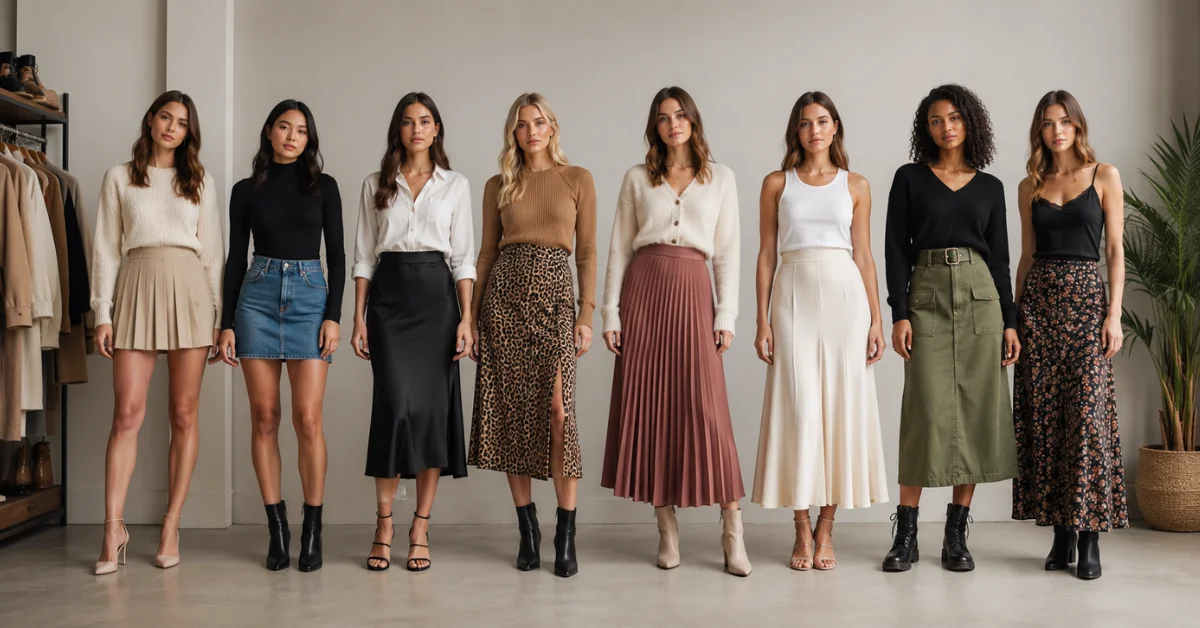
What Are Skirts?
Skirts are a foundational piece of women’s clothing—a garment that covers the waist downward, separate from any top. Skirts come in dozens of lengths, silhouettes, and fabrics, making skirts one of the most versatile wardrobe essentials for every season and personal style.
The right skirts flatter your body type, suit the occasion, and work effortlessly throughout the year. Whether you’re reaching for a denim mini skirt on the weekend, a flowy midi skirt for the office, or a formal maxi skirt for a special event, understanding the different types of skirts helps you shop smarter, build a more versatile wardrobe, and style skirts with confidence every single time.
Why Skirts Have Stayed a Wardrobe Essential for Centuries
Skirts predate trousers by thousands of years. Ancient Egyptian and Greek civilizations wrapped fabric around the waist for comfort in warm climates. Through the centuries, the silhouette has shifted — wide crinoline volumes in the Victorian era, the liberating short hem of the 1960s, the power-dressing midi of the 1980s — but the garment itself has never left.
Today, skirts occupy every corner of fashion: fast fashion retailers cycle through trend-driven styles in weeks, while luxury houses revisit classic silhouettes each season. The cultural persistence of skirts reflects something practical — they are easy to wear, easy to dress up or down, and comfortable across a huge range of climates and activities.
The Main Types of Skirts Explained
Understanding the core silhouettes makes every shopping decision clearer.
Mini Skirts
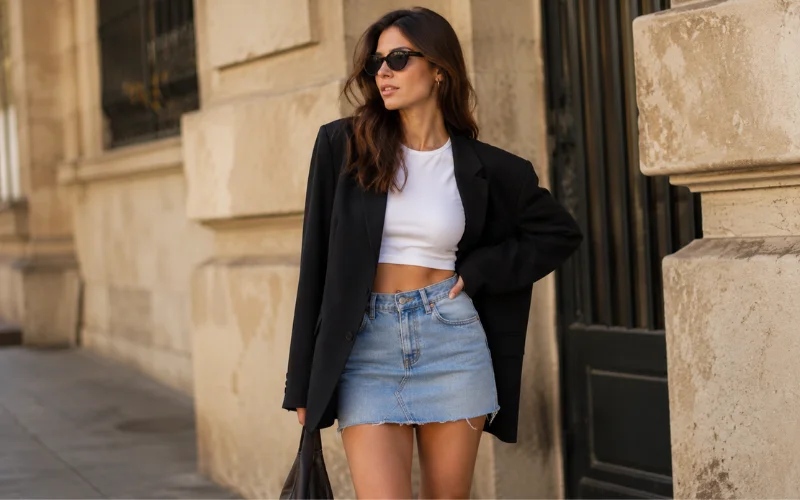
A mini skirt falls above the knee — typically 14 to 16 inches in length. The style became iconic in the 1960s, popularized by designers like Mary Quant, and has cycled through multiple revivals since. Today’s mini skirts range from body-skimming denim styles to pleated schoolgirl cuts and bodycon knit versions.
They work best styled with a relaxed top to balance the proportions. A fitted crop or an oversized blazer is the go-to pairing in contemporary fashion.
Midi Skirts
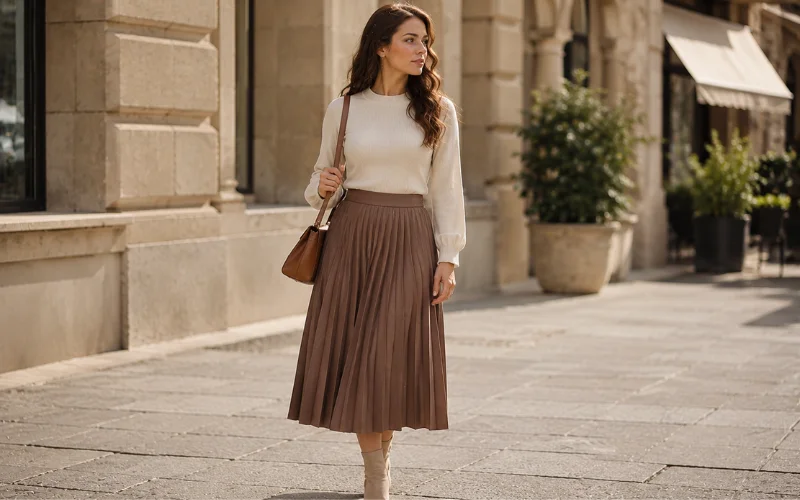
The midi skirt hits somewhere between the knee and the ankle — usually mid-calf. It is arguably the most wearable length in the category because it suits most body types and crosses over easily from casual to professional settings.
Midi skirts in cotton, linen, satin, and knit fabrics have dominated runways and everyday wardrobes for the past several years. A satin bias-cut midi dressed up with heels reads evening-ready; the same silhouette in linen with sandals is a summer staple.
Maxi Skirts
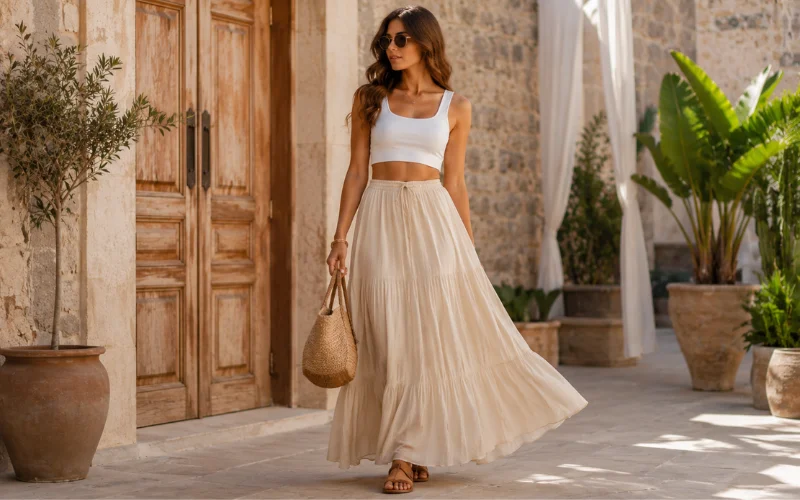
Maxi skirts graze the ankle or floor. They carry a bohemian, relaxed energy when made in lightweight fabrics like chiffon, gauze, or jersey, and take on a more formal register in structured crepe or satin.
Maxi skirts are particularly practical in hot climates because they offer full coverage while remaining airy — which is part of why they dominate summer resort and beachwear categories.
A-Line Skirts
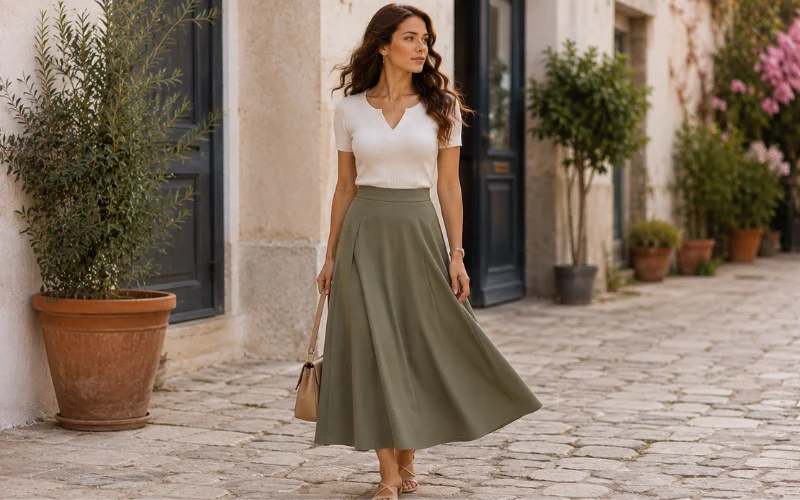
An A-line skirt fits at the waist and flares gently outward, tracing the shape of the letter A. This is one of the most universally flattering silhouettes because it skims the hips and thighs without clinging.
A-line skirts appear at every length — mini, midi, and maxi — and in virtually every fabric. They originated in the 1950s and remain a cornerstone of classic and contemporary fashion alike.
Pencil Skirts
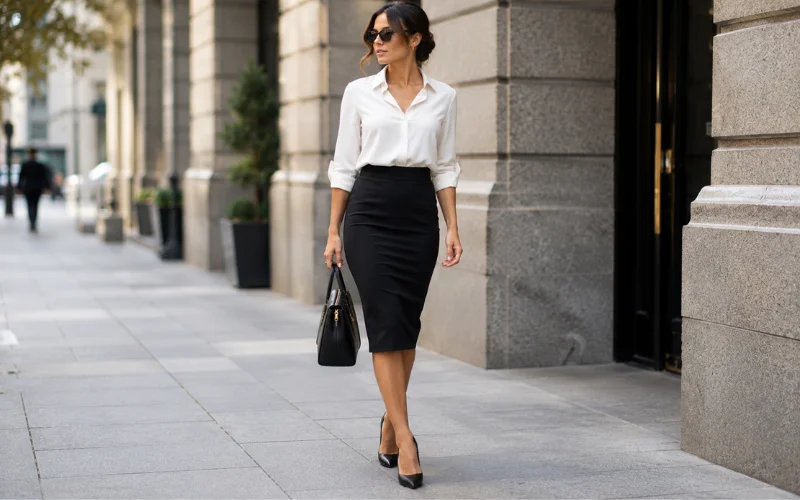
The pencil skirt is fitted through the hips and thighs, tapering slightly toward the hem. It delivers a polished, tailored look and is a staple of professional wardrobes.
Pencil skirts require a relatively close fit through the seat to look intentional rather than constricting. They pair most naturally with structured tops and heels, though modern styling often subverts this with sneakers or chunky boots for contrast.
Pleated Skirts
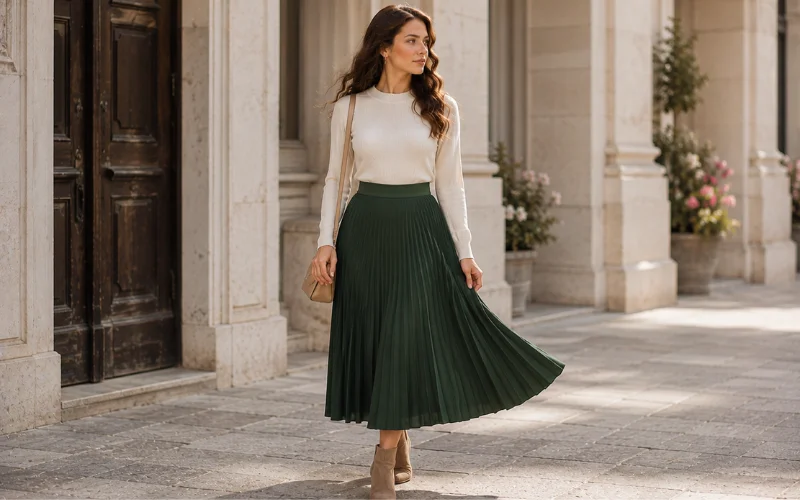
Pleated skirts feature folded fabric that adds volume and movement. Box pleats create structured fullness; knife pleats fall in a more fluid, directional way. Pleating can appear on a mini, midi, or maxi length, giving the skirt a dynamic, animated quality when walking.
Wrap Skirts
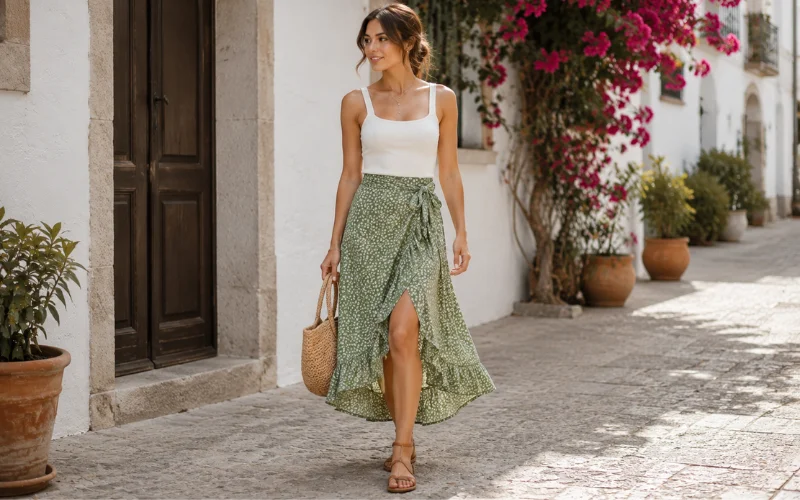
A wrap skirt crosses at the front and ties or fastens at the waist. The adjustable nature makes them highly size-inclusive — the fit can be customized by tightening or loosening the wrap. They are particularly popular in lightweight summer fabrics.
Denim Skirts
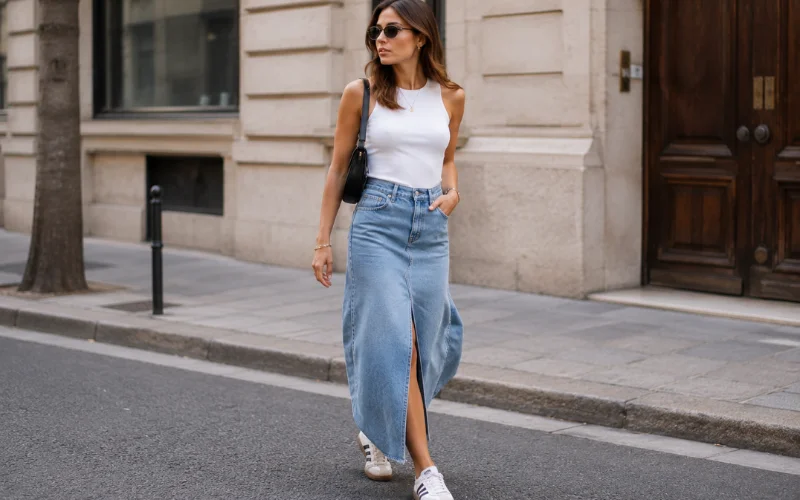
The denim skirt crosses multiple silhouette categories — it can be a mini, midi, or maxi — unified by the material. Denim skirts have experienced a major revival, particularly in barrel-hem and asymmetric styles, which dominated street style from 2023 onward.
How to Choose the Right Skirt for Your Body Type
This is where most style guides fall short — they list body shapes and assign skirt like a formula. In practice, personal preference, confidence, and proportion matter more than any rule.
That said, a few principles genuinely help:
- If you want to emphasize the waist: High-waisted styles in A-line or wrap silhouettes work well. The waistband acts as a visual anchor that draws attention to the narrowest point of the torso.
- If you prefer to minimize the hip area: Straight or bias-cut skirt in medium-weight fabrics drape smoothly without adding visual bulk. Avoid heavy pleating at the hip.
- If you want to add visual curves: Flared and pleated skirt add volume through the hips and thighs, creating the impression of a more pronounced hip-to-waist ratio.
- For petite frames: Midi skirt can work beautifully, but proportion matters — a cropped top or tucked-in blouse keeps the look from feeling overwhelming. Mini lengths naturally elongate the leg.
- For taller frames: Maxis and midis tend to look proportional and elegant. Almost every length works, offering a lot of creative range.
Fabric Guide: What Your Skirt Is Made Of Matters
The fabric of a skirt determines how it drapes, how it wears across seasons, and how long it lasts.
- Linen and cotton breathe well in summer and get softer with washing. They are casual-leaning but can be elevated with the right silhouette.
- Satin and silk catch light and drape fluidly. These read more formal and require more careful laundering.
- Denim is structured and durable. It resists wrinkling and holds its shape across long wear.
- Knit fabrics (jersey, rib knit) stretch with the body and are among the most comfortable options. They work well in bodycon or midi silhouettes.
- Chiffon and organza are sheer and lightweight, best layered or used as a skirt with built-in lining.
Skirt Styling by Occasion
Casual everyday
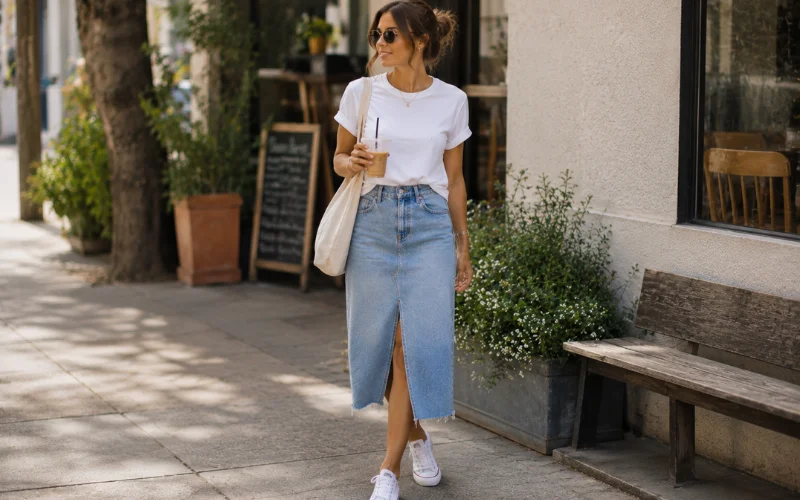
Denim or cotton midi skirt with a basic tee and sneakers or flat sandals. The key is keeping one element relaxed so the look doesn’t become overdressed.
Office and business casual
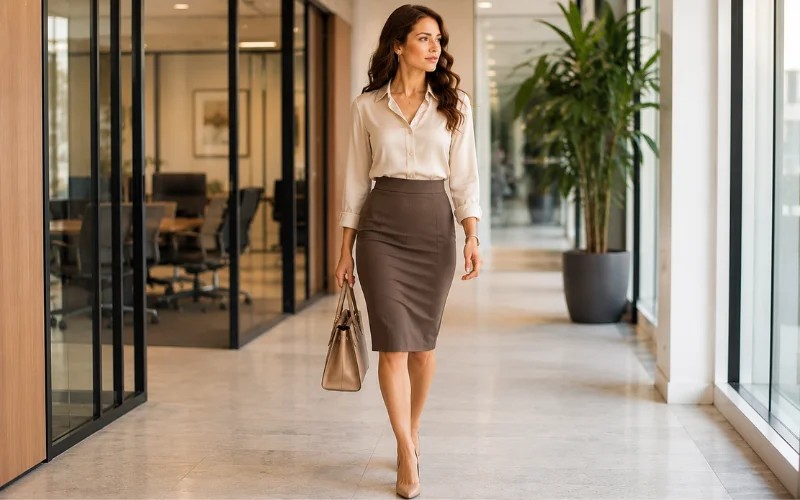
Pencil skirt or tailored A-lines in structured fabrics. Pair with a blouse, fitted knit, or blazer. Stick to neutral palettes or subtle prints for a professional result.
Evening and events
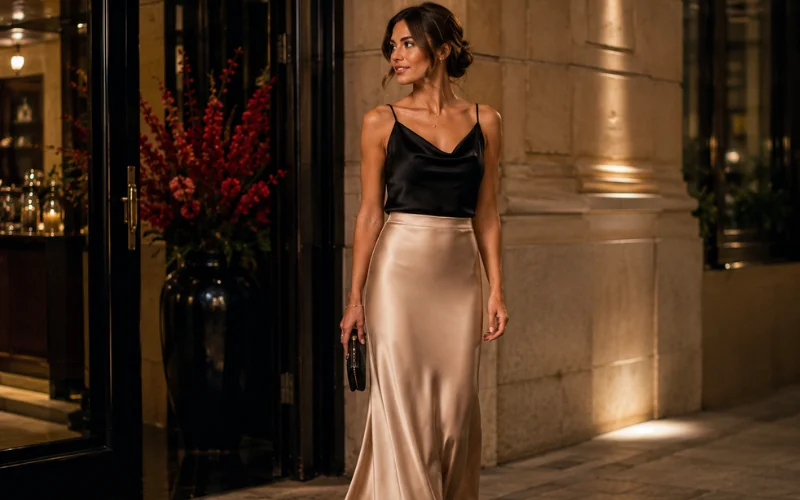
Satin midi or maxi skirt, pleated metallic styles, or structured mini skirt with heels. Minimal accessories let the silhouette do the work.
Outdoor and travel
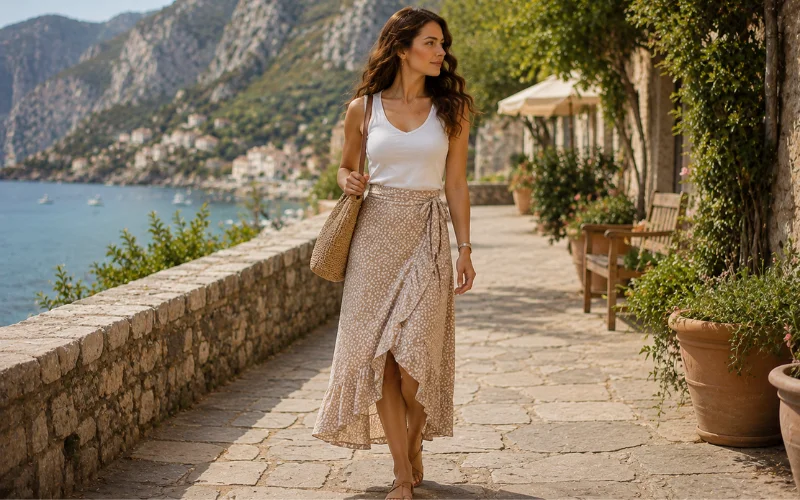
Wrap skirt, jersey midis, and lightweight maxis are practical — easy to pack, comfortable across long days, and adaptable to changing weather.
Frequently Asked Questions About Skirts
1. What length of skirt is most flattering?
There is no single most flattering length — it depends on proportion and personal preference. A-line midis and high-waisted minis work well across most body types because they define the waist while offering different coverage levels.
2. What is the difference between a midi and maxi skirt?
A midi skirt typically ends between the knee and mid-calf. A maxi skirt reaches the ankle or floor. The boundary overlaps, so if a skirt hits at the calf or lower, it’s usually marketed as either a long midi or a maxi.
3. How do you style a skirt for a petite frame?
Keep the waistline high and pair with a fitted or tucked top. Choose fabrics that drape cleanly rather than adding bulk, and opt for single-color outfits to create a continuous vertical line.
4. Are skirt appropriate for the workplace?
Yes — pencil skirt, A-line midis, and tailored wrap skirt are all workplace-appropriate in most professional settings. Length and fabric choice matter more than the garment category itself.
5. What shoes work with midi skirt?
Midi skirt pair well with mules, block heels, ankle boots, loafers, and even chunky sneakers. The key is balancing the volume — slim shoes work with fuller skirt, while chunkier footwear grounds simpler silhouettes.
6. How do you keep a skirt from riding up?
Wearing a slip or half-slip underneath helps fabric glide rather than cling. Fabric tape applied at the hem can also anchor lighter skirt in windy conditions.
7. What tops go with a pleated skirt?
A tucked-in fitted tee or a thin knit keeps the look clean. Cropped tops that hit at or just above the waistband also work well, maintaining the waist definition the pleats create.
8. Can skirt be worn in winter?
Absolutely. Pair midi or maxi skirt with tights, knee-high boots, and a chunky knit or wool coat. Layering is the key — skirt are as season-appropriate as any trouser when you dress around them correctly.
9. What is the most versatile skirt style to own?
A midi A-line skirt in a neutral solid color — black, camel, or cream — is the most versatile single purchase. It transitions between casual, work, and evening settings more easily than any other silhouette.
10. How do you wash and care for skirt?
It depends on the fabric. Cotton and denim can typically be machine washed cold. Satin, silk, and chiffon should be hand washed or dry cleaned. Always check the care label — fabric blends sometimes have specific requirements that the material name alone doesn’t convey.
Final Thoughts
Skirt have earned their permanent place in fashion for good reason — no other single garment offers the same range of silhouettes, lengths, fabrics, and styling possibilities within one category. Understanding the core types, from the versatile A-line to the relaxed wrap to the structured pencil, gives you a practical foundation for building a wardrobe that genuinely works.
The best skirt for you is the one that fits your lifestyle, suits your proportions, and makes you feel confident. Start with one great midi in a neutral color, and build from there.