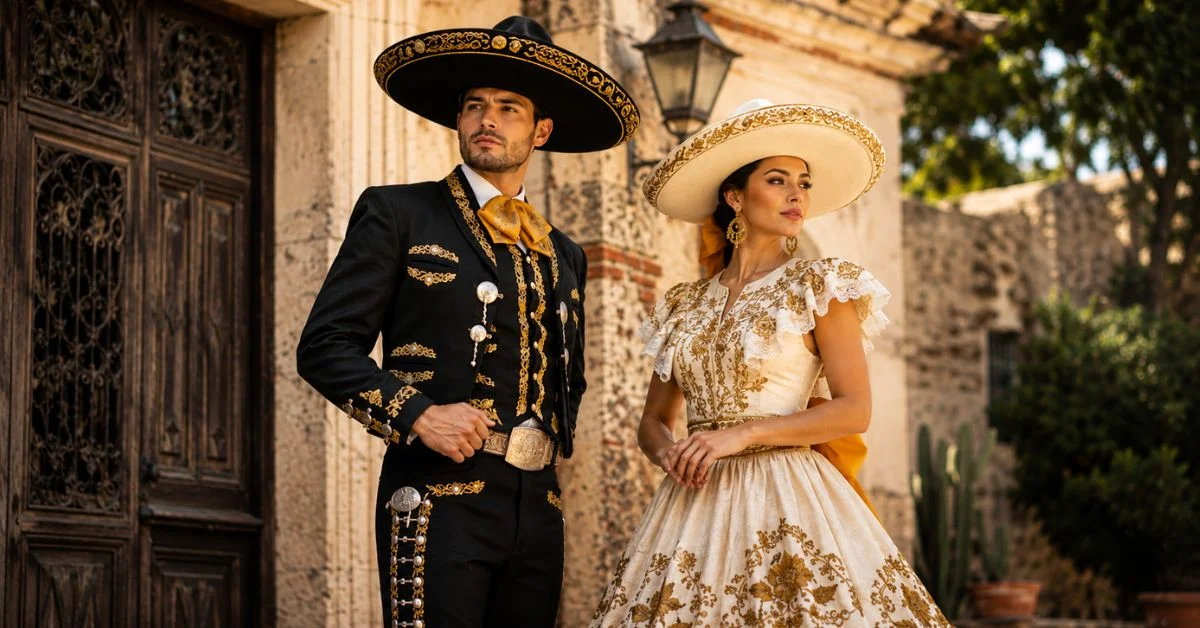
A charro outfit is a traditional Mexican suit built around a short, fitted jacket and matching tightly-cut trousers, both finished with decorative buttons or embroidery, paired with an embroidered belt, a wide bow tie, ankle-high boots, and a wide-brimmed sombrero. It originated from Spanish equestrian riding attire and became the formal dress of Mexico’s rural horsemen before evolving into the look most people now associate with mariachi musicians, quinceañera escorts, and charreada (Mexican rodeo) participants.
If you’re shopping for one, the fastest way to get it right is this: match the suit’s formality and color to the occasion first, then get the jacket and trouser fit checked by someone experienced with this style, since the silhouette is closer to a tailored equestrian suit than a standard dress suit. A gala or wedding charro outfit usually means a fully embroidered jacket in black, navy, or gray with silver or gold thread detailing, while a charreada or performance outfit favors more durable, simpler trim built for movement.
The rest of this guide walks through the full anatomy of the suit, why certain elements exist the way they do, how to choose one by occasion and size, and answers to the questions people ask most often before buying or renting their first charro outfit.
Why the Charro Outfit Looks the Way It Does
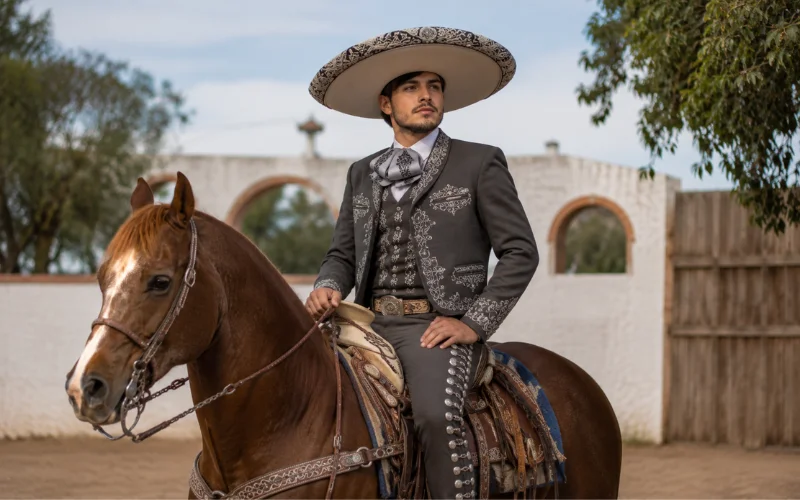
The structure of a charro outfit isn’t decorative by accident — every piece has a practical or historical reason behind it, and understanding that context makes shopping for one far easier.
The suit traces back to Spanish hacienda owners and their horsemen, who needed clothing that was both functional on horseback and a visible marker of status. Early Mexican mariachi musicians, by contrast, performed in plain white shirts, simple trousers, and huaraches, reflecting their working-class roots. As mariachi groups began performing in town plazas and markets to earn a living, they adopted the more elaborate look of the landowning class to draw attention and command respect — which is how the charro outfit became tied to mariachi identity rather than horsemanship alone.
This history explains a few design choices that often confuse first-time buyers:
- The short jacket (chaquetilla) allows free arm movement, originally for riding and roping, which is why it never extends past the waist.
- The fitted trousers with side buttons (botonadura) were designed to be easy to remove over riding boots, a detail still used today even though most wearers aren’t riding horses.
- The wide-brimmed sombrero provided sun protection during long hours outdoors and remains the most recognizable piece of the outfit.
- The embroidered belt (cinto bordado) and silver or thread detailing signaled wealth and craftsmanship, a tradition that continues through hand-stitched embroidery today.
Knowing this background helps you recognize which elements are essential to an authentic charro outfit and which are stylistic variations added for a specific event.
Anatomy of a Charro Outfit: What Each Piece Does
A complete charro outfit typically includes the following components, each playing a specific role in the overall look:
| Component | Purpose | Common Materials |
|---|---|---|
| Chaquetilla (jacket) | Short, fitted top piece, often embroidered | Wool, gabardine, suede |
| Pantalón (trousers) | Tight-fitting trousers with side buttons or piping | Wool, cotton-blend |
| Cinto bordado (belt) | Decorative waist piece, sometimes holding a buckle | Leather with embroidery |
| Corbata de bolo or moño | Wide bow tie or bolo-style necktie | Silk, satin |
| Botines (boots) | Ankle-high boots, often in leather | Leather |
| Sombrero | Wide-brimmed felt or straw hat | Felt, palm straw |
| Camisa (shirt) | Fitted dress shirt worn under the jacket | Cotton, cotton-blend |
Higher-end charro outfits add hand embroidery along the jacket lapels and trouser seams, while more affordable versions use machine stitching or appliqué trim that mimics the same pattern at a lower cost.
How to Choose the Right Charro Outfit by Occasion
Not every charro outfit is built for the same purpose, and matching the suit to the event matters both for comfort and for tradition.
Weddings and Quinceañeras
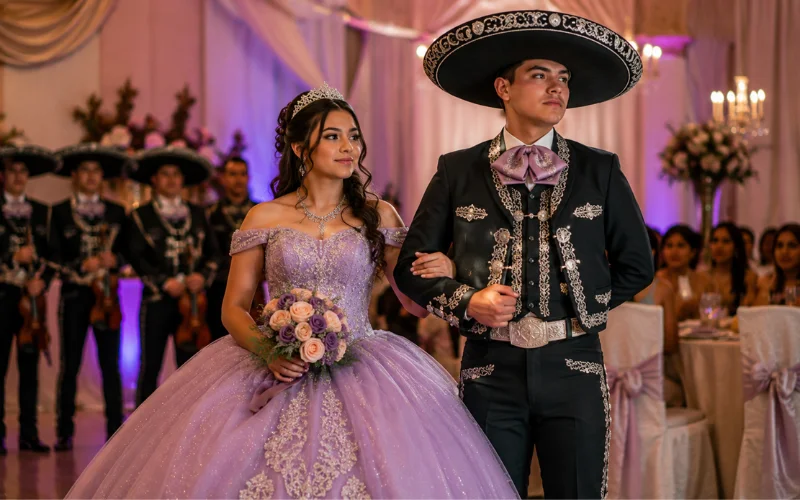
For weddings, quinceañera court escorts (chambelanes), or formal family events, choose a charro outfit with:
- Fine embroidery in silver or gold thread along the jacket and trouser legs
- A coordinated color palette that matches the event’s formal colors (commonly black, navy, burgundy, or gray)
- A matching belt and bow tie set, often sold as a complete package with the suit
Mariachi Performance
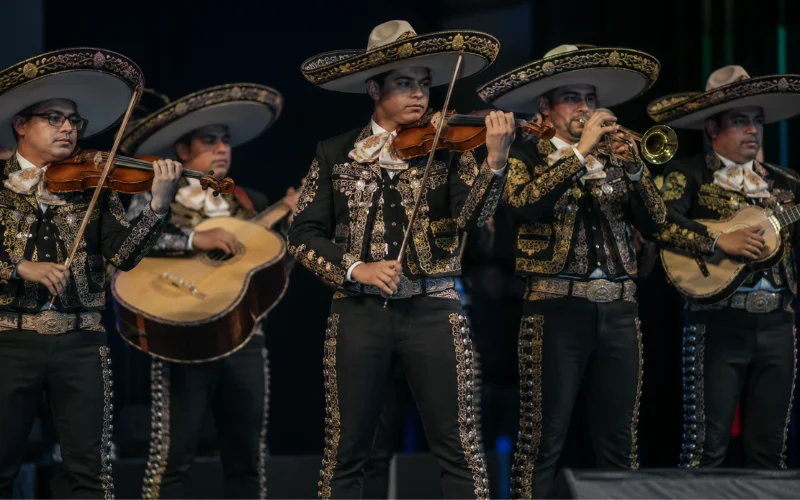
Performance charro outfits prioritize durability and consistency across a group:
- Slightly more breathable fabric, since performers wear the suit for hours under stage lighting
- Matching colors and embroidery patterns across the whole group for visual unity
- Reinforced seams at the shoulders and underarms for repeated movement
Charreada (Mexican Rodeo)
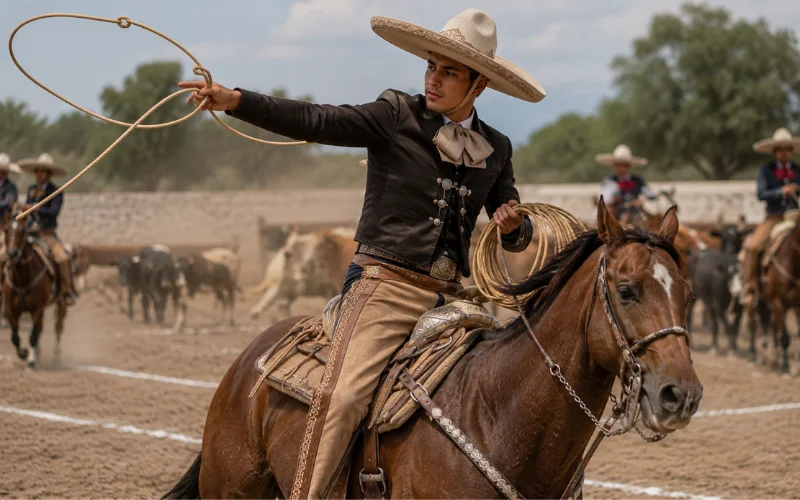
Outfits for actual horseback riding or roping events are simpler and more functional:
- Heavier-duty trouser fabric for saddle friction
- Less ornate embroidery to reduce snagging
- Riding-specific boots rather than dress-style botines
Children’s and Baptism Outfits
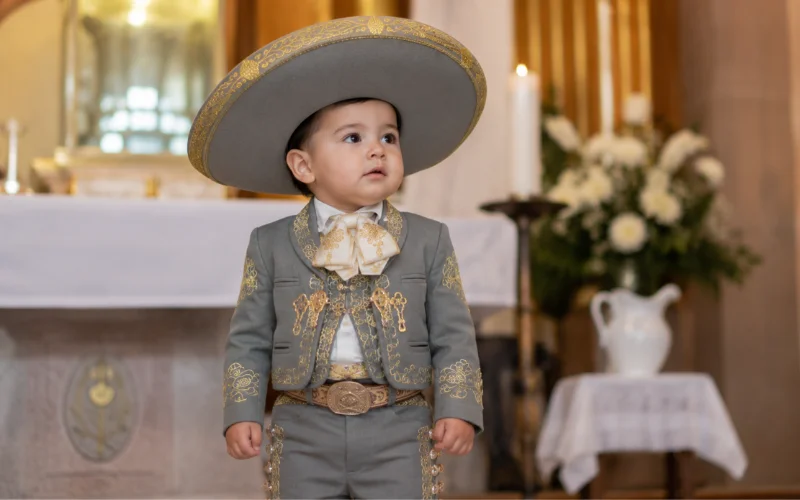
Boys’ charro suits for baptisms, birthdays, or quinceañera presentations follow the same structure in miniature, usually with simplified embroidery and stretch-friendly fabric for comfort during long events.
Getting the Fit Right: A Step-by-Step Approach
Because a charro outfit fits closer to the body than a standard suit, sizing mistakes are common. Follow this sequence when trying one on or having one tailored:
- Check the jacket length first. It should end at the natural waistline — if it covers the hips, it’s the wrong cut for this style.
- Test arm mobility. Raise both arms above your head; the jacket shouldn’t pull tightly across the back or restrict movement, since mariachi performance and dancing both require a full range of motion.
- Confirm trouser fit at the waist and ankle. Charro trousers are meant to sit close to the leg without bagging, and the hem should break cleanly at the top of the boot.
- Check the belt and buckle placement. The embroidered belt should sit at the natural waist, not the hips, to keep the silhouette traditional.
- Try the boots and hat together, not separately. The proportions of a charro outfit depend on the hat brim balancing the jacket’s shoulder width — trying these in isolation often leads to a mismatched final look.
Alternative Solutions for Specific Needs
A standard charro outfit purchase doesn’t fit every situation. Here are targeted alternatives worth considering:
- Renting instead of buying: For a one-time event like a wedding or quinceañera, renting a charro outfit is often more practical than buying, especially for fast-growing children or guests who won’t wear it again soon.
- Custom tailoring for a non-standard build: If off-the-rack sizing doesn’t fit well through the shoulders or waist, a local tailor experienced with equestrian-style suits can adjust the jacket and trousers without losing the traditional silhouette.
- Budget-friendly versions for group events: For large mariachi ensembles or multiple chambelanes at a quinceañera, machine-embroidered or appliqué-trimmed suits offer the same visual effect as hand embroidery at a lower per-unit cost.
- Heat and comfort adjustments: For outdoor summer weddings or charreadas, choose lighter wool-blend fabric over heavier gabardine, and consider a lower-crown sombrero for better airflow.
- Heritage and respect considerations: If you’re wearing a charro outfit without a personal or cultural connection to the tradition, take time to understand its significance — speaking with a tailor or cultural organization familiar with the garment’s history is a respectful way to make informed choices about styling and use.
Frequently Asked Questions
1. What is a charro outfit?
A charro outfit is a traditional Mexican suit consisting of a short fitted jacket, matching trousers with side detailing, an embroidered belt, a wide bow tie, ankle boots, and a wide-brimmed sombrero, originally worn by Mexican horsemen.
2. What’s the difference between a charro outfit and a mariachi suit?
They share the same base structure, but mariachi suits are often more heavily embellished with embroidery and matched in color across a performing group, while traditional charro outfits worn for riding are simpler and more functional.
3. How much does a charro outfit typically cost?
Prices vary widely based on embroidery detail and fabric quality, ranging from budget machine-embroidered versions to higher-end hand-stitched suits with silver or gold thread detailing.
4. Can women wear a charro outfit?
Yes, women’s versions exist, often called traje de charra, typically featuring a fitted jacket, a skirt or trousers, and the same embroidered belt and sombrero elements as the men’s style.
5. What colors are traditional for a charro outfit?
Black, navy, gray, and brown are the most traditional choices, though burgundy and other colors are common for weddings and quinceañeras to match the event’s palette.
6. How should a charro outfit fit?
The jacket should end at the natural waist and allow full arm movement, while the trousers should sit close to the leg without bagging and break cleanly at the top of the boot.
7. Is it disrespectful to wear a charro outfit without Mexican heritage?
Context matters most — wearing it with genuine appreciation for a related cultural event, performance, or tradition is generally welcomed, while wearing it as a costume without understanding its significance can be seen as dismissive of its meaning.
8. What’s the best way to care for embroidery and silver thread detailing?
Spot clean rather than machine wash, store the jacket on a padded hanger to preserve the shoulder shape, and have professional dry cleaning done by someone experienced with embroidered garments.
9. Should I buy or rent a charro outfit for a one-time event?
Renting usually makes more sense for single-use occasions like a wedding or quinceañera presentation, while buying is more practical for performers or anyone wearing the outfit regularly.
10. What boots go with a charro outfit?
Ankle-high leather boots (botines) are standard for dress and performance versions, while charreada or riding-specific outfits use sturdier, riding-appropriate boots built for stirrup use.
Final Thoughts
A charro outfit is more than a costume — it’s a garment with a documented history rooted in Spanish equestrian tradition, Mexican social class, and decades of mariachi culture, and every piece of it serves a purpose that goes back generations. Whether you’re choosing one for a wedding, a quinceañera court, a mariachi performance, or a charreada, the keys to getting it right are the same: understand what each component is meant to do, match the formality and embroidery level to your occasion, and prioritize a proper fit over simply picking the most decorated option on the rack. Approached this way, a charro outfit isn’t just something you wear for one event — it’s a piece of craftsmanship and history worn with the respect it deserves.