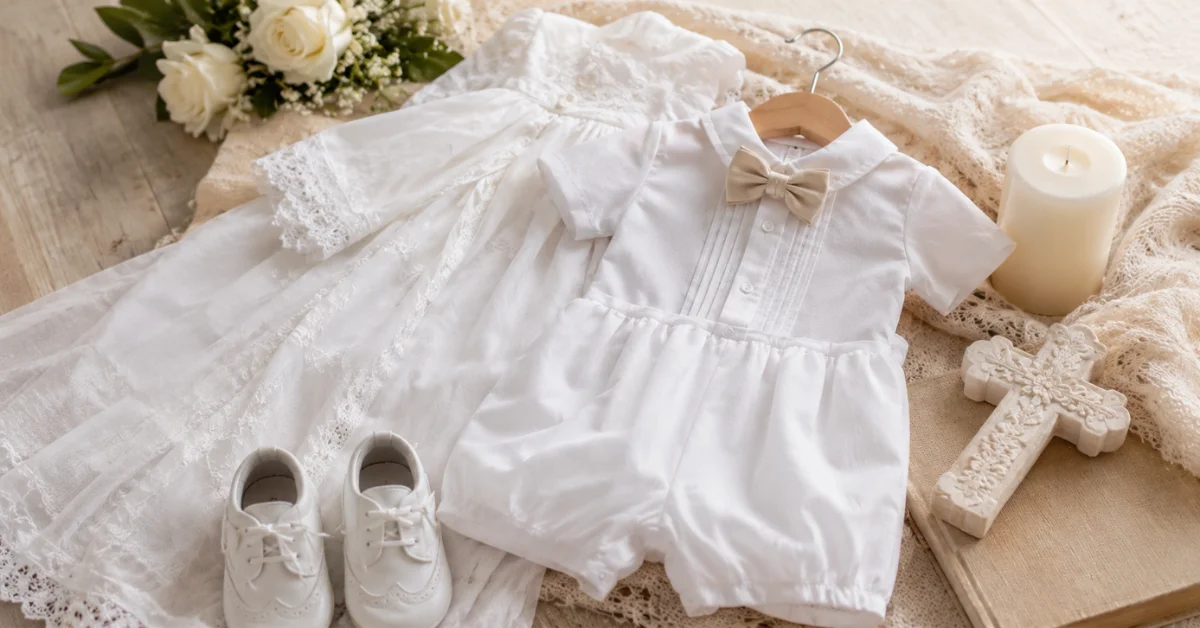
Choosing the right boy baptism outfit seems simple until you actually start looking. Should your baby wear a traditional gown or a small suit? Does the color matter? What if the ceremony involves full immersion in water? Most guides answer one or two of these questions and stop there. This guide goes further because the best boy baptism outfit depends on your denomination, your baby’s age, the season, and how the baptism ceremony is performed.
Here’s the short version. A boy baptism outfit generally falls into three categories: a traditional baptism gown or romper set for infants under six months, a soft knit or cotton creeper for older or more active babies, and a tailored suit or vest set for toddlers being baptized around one or two years old. White and ivory remain the most traditional colors across many Christian denominations, symbolizing purity, while soft blue, beige, and other light neutral shades are widely accepted alternatives. Ultimately, the best boy baptism outfit depends less on what looks best in photos and more on the specific traditions and practical needs of your family’s ceremony, which is exactly what this guide will help you navigate.
Why the boy baptism outfit Choice Actually Matters
A boy baptism outfit is more than something your baby wears for photos. In many families, it becomes a cherished keepsake passed down through generations, worn by siblings, cousins, or even grandchildren decades later. That’s why many parents choose a timeless boy baptism outfit with classic, simple styling instead of trendy details. A traditional white gown or understated romper will usually look just as elegant in family albums years from now as it does on the day of the ceremony.
There’s also a practical side that many guides overlook. The best boy baptism outfit should work with the way the baptism is actually performed, not just look beautiful while your baby is being held. A child who will be fully immersed in water needs different fabrics and construction than one who will simply have water poured over the forehead. Choosing the right boy baptism outfit helps prevent heavy, soaked, or see-through clothing after the ceremony, making the experience more comfortable for your baby and ensuring your family photos look just as beautiful as you imagined.
Gown, Romper, or Suit: How to Choose
The three most common styles each suit a different situation. Here’s how to think through the decision.
The traditional gown
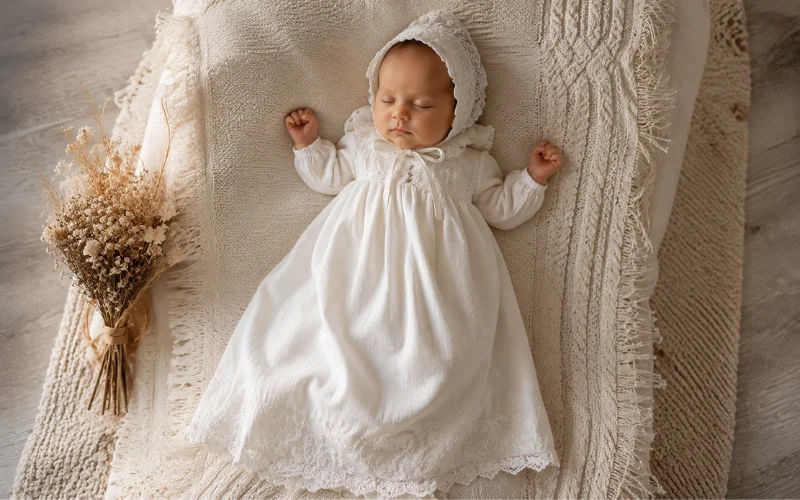
is the classic choice for infants under three months old. Long, flowing, and usually made from cotton, linen, or a cotton-poly blend, it’s designed to be worn once and preserved afterward. Gowns are the most photogenic option and the easiest to put on a squirming newborn, since there’s no need to fit tiny arms through fitted sleeves.
The romper or creeper set
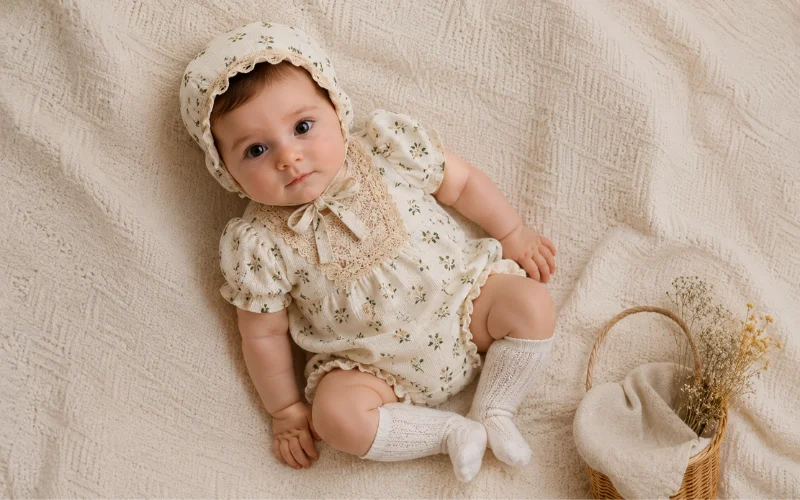
works well for babies between three and nine months, particularly once a baby is sitting up, rolling, or generally more mobile. These sets usually include a matching bonnet and are easier to manage for diaper changes during a long service. They photograph almost as well as a gown but offer more practicality.
A small suit, vest, or shorts set
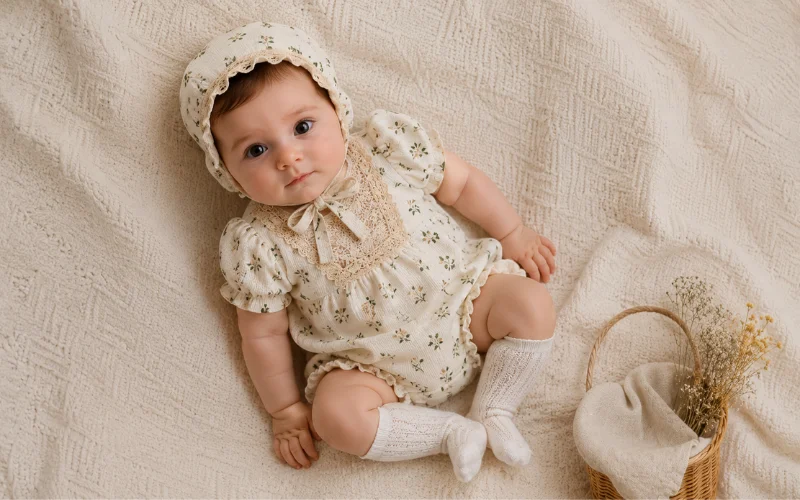
suits toddlers being baptized or dedicated closer to twelve to twenty four months. At this age, many families move away from infant-style gowns because a walking toddler in a floor-length gown becomes a tripping hazard. A simple vest with matching shorts, in white or soft blue, keeps the traditional look without the practical problems.
Sizing by Age: What Most Guides Get Wrong
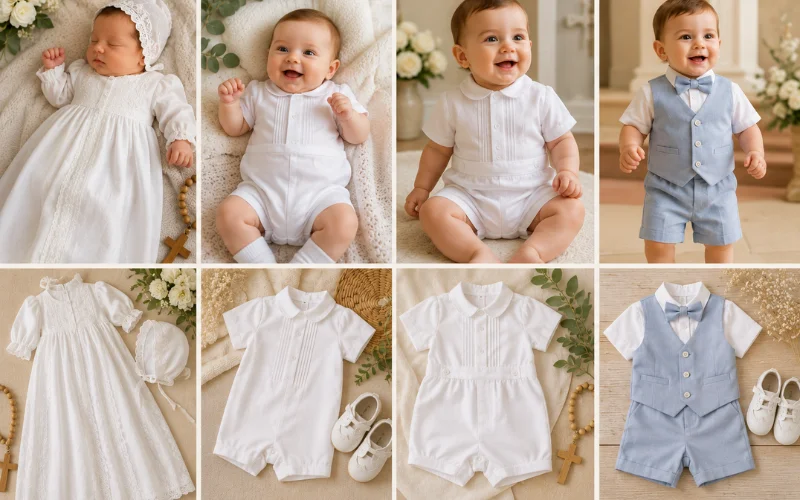
Most articles list generic size ranges like newborn to three months without accounting for the fact that baptisms happen at very different ages depending on denomination and family tradition. Here’s a more useful breakdown:
- Newborn to 2 months (Catholic infant baptism): Choose a gown with extra room in the shoulders. Newborns can gain a pound or more between ordering and the ceremony, so sizing up slightly is safer than sizing down.
- 3 to 6 months: A romper set or fitted gown works well, since proportions are more consistent at this stage.
- 6 to 12 months: Look for adjustable waistbands or snap closures, since babies vary enormously in height and weight.
- 1 to 2 years (toddler dedication, common in Protestant and non-denominational churches): Order based on current height and weight rather than age labels, since toddler sizing varies more by brand.
Denomination and Ceremony Style Matter More Than You’d Think
This is the part almost no other guide addresses clearly, and it genuinely changes what outfit makes sense.
Catholic baptisms
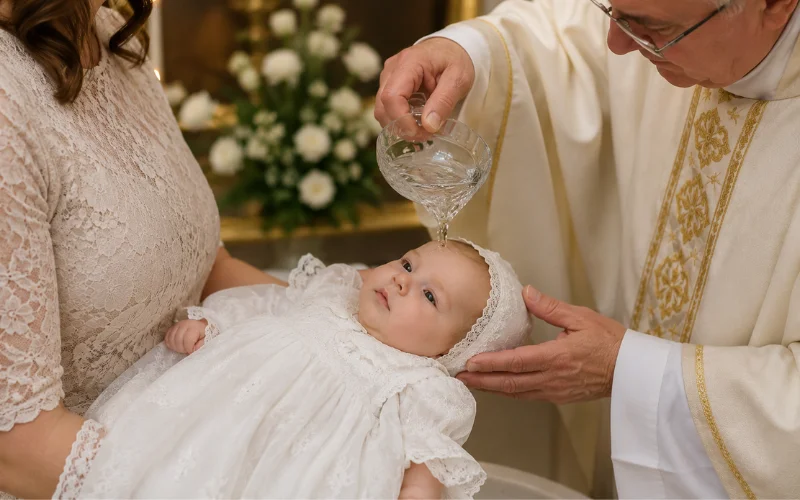
typically involve pouring a small amount of water over the baby’s forehead, so a full gown works without any issues. Catholic tradition places strong emphasis on white as a symbol of purity, and many families use a gown blessed or handed down within the family. A white bonnet is common alongside the gown.
Protestant and non-denominational baptisms
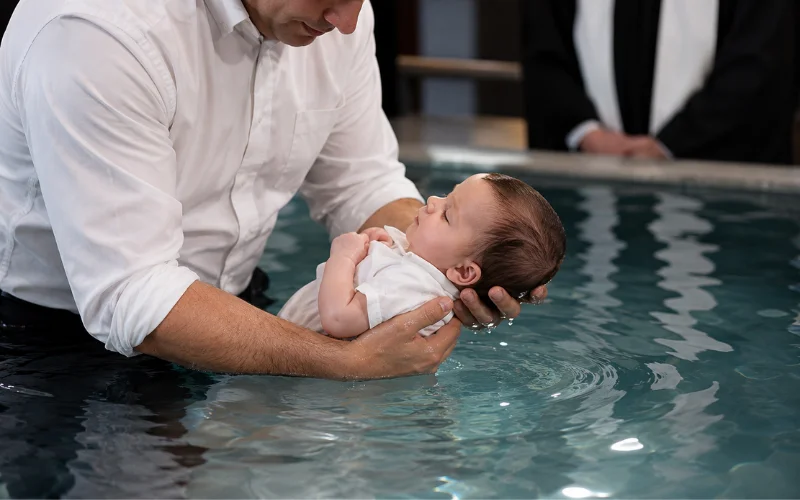
vary more widely. Some churches sprinkle water, others perform full immersion, even for infants. If your church practices immersion, ask your pastor in advance. A heavy, layered gown is impractical for immersion, so a simple, lightweight cotton outfit that dries quickly and doesn’t turn see-through is a far better choice.
Orthodox Christian baptisms
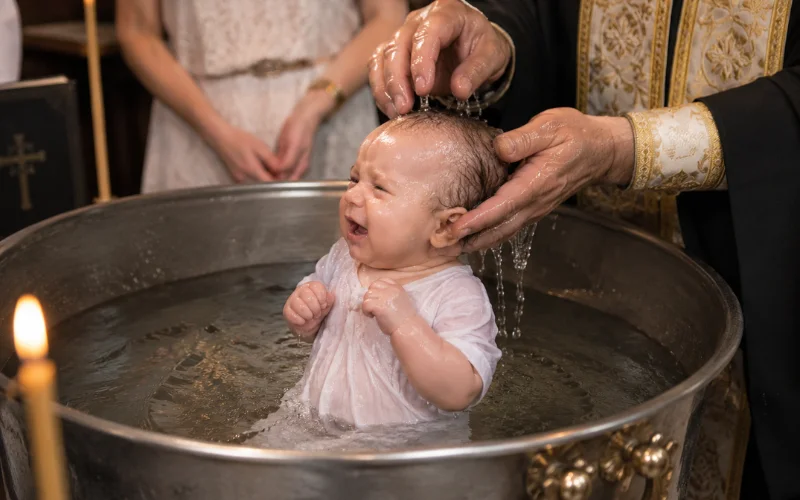
almost always involve full immersion, sometimes three times. Families often dress the baby in a simple white garment made for immersion, then change into a formal outfit afterward for photos. If this applies to you, plan for two outfits rather than one.
Asking your officiant about the exact ceremony format before you shop saves both money and stress. It’s a five-minute call that most parents skip until it’s too late.
Seasonal and Practical Considerations
Ceremony logistics change with the calendar, and outfit choice should follow.
- Summer or warm-weather baptisms: Choose breathable cotton or linen rather than polyester, which traps heat and can cause a fussy, overheated baby.
- Winter baptisms: Layer a soft cardigan or shawl for the walk into church, then remove it for the ceremony and photos.
- Outdoor or beach baptisms: Lightweight, simple fabrics handle wind and movement better than heavily beaded gowns, which can look overdone outdoors.
Caring for the Outfit Afterward
If the outfit is meant to become a family heirloom, how you clean and store it matters just as much as the outfit itself, and this is a step almost every retailer skips after the sale.
- Hand wash in cold water with a gentle, dye-free detergent rather than a washing machine, which can stress delicate stitching and lace.
- Air dry flat rather than using a dryer, since heat can yellow white fabric over time.
- Store in an acid-free box rather than a plastic bag, which can trap moisture and cause yellowing or mildew.
- Avoid folding along the same creases repeatedly for long-term storage, since permanent fold lines weaken fabric fibers.
- A little care after the ceremony often decides whether the outfit stays pristine for a second child’s baptism or ends up yellowed and creased beyond saving.
A Note for Godparents and Gift-Givers
If you’re a godparent or grandparent shopping for a boy baptism outfit, a little planning goes a long way. Confirm the baby’s current weight instead of guessing what size he’ll be by the ceremony, since babies grow at different rates. It’s also helpful to ask whether the family has any denomination-specific preferences, especially if the baptism involves full immersion rather than water being poured over the forehead. When you’re unsure about sizing, choosing a boy baptism outfit with a gift receipt or store credit is often the most practical option, giving the parents the flexibility to exchange it if needed.
Frequently Asked Questions
Does a baby boy have to wear white for baptism?
No. White is traditional and symbolizes purity, but soft blue, ivory, and beige are accepted in most denominations. Check with your church if you’re unsure.
What is the difference between a christening gown and a baptism gown?
The terms are largely interchangeable. Christening is more common in Anglican and some Protestant traditions, while baptism is the more universal term across Catholic and Orthodox churches.
Can a boy wear a romper instead of a gown?
Yes. Rompers and creeper sets are a practical, widely accepted alternative, especially for babies older than three months or more active ones.
What should a baby wear for a full immersion baptism?
Choose a lightweight, simple cotton garment that won’t become heavy or see-through when wet. Avoid layered gowns, and bring a second outfit for photos afterward.
How far in advance should I buy the baptism outfit?
Order at least three to four weeks ahead, especially for gowns needing alterations or monogramming, and confirm sizing closer to the date since babies grow fast.
Do I need a bonnet or cap with the outfit?
It’s traditional but not required. Bonnets are more common in Catholic and Orthodox baptisms than in casual or outdoor Protestant ceremonies.
What size should I order if the baptism is a few months away?
Order slightly larger than the baby’s current size, and choose a style with adjustable snaps or an elastic waist if possible.
Is it okay to reuse a family heirloom gown for a boy?
Yes. Many heirloom gowns are unisex in design and have been worn by multiple children in the same family, regardless of gender.
Final Thoughts
Choosing the right boy baptism outfit comes down to matching the outfit to three key factors: your baby’s age and mobility, the style of baptism ceremony your church performs, and how much you want the outfit to become a lasting keepsake after the special day. A traditional gown is ideal for a calm infant baptism, a soft romper works well for active babies or more casual ceremonies, and a small suit or vest set is often the best boy baptism outfit for toddlers participating in a baptism or dedication. Once you know which option fits your family’s situation, choosing the perfect boy baptism outfit becomes much simpler than it first appears.