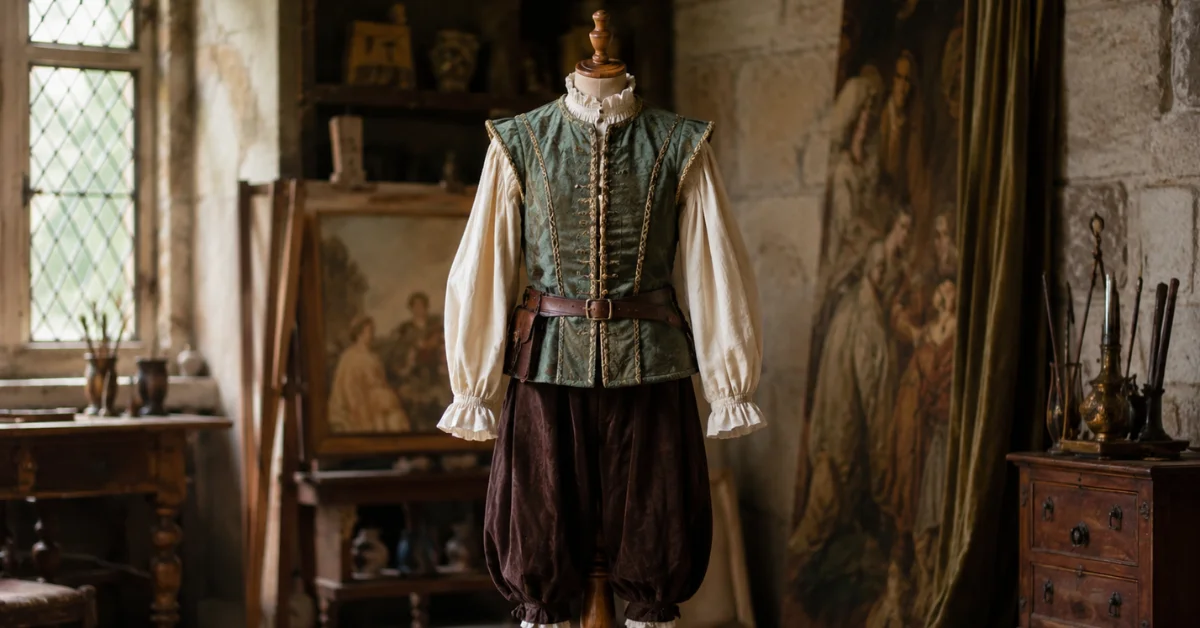
A good Renaissance outfit is built in layers, not bought as a single costume piece. Start with a simple base layer (a chemise or shirt plus a skirt, leggings, or trousers), add a fitted middle layer like a bodice, doublet, or vest, then finish with an overdress, cloak, or surcoat and period-style accessories — a belt, pouch, and headwear. This layering approach is what separates a Renaissance outfit that looks intentional from one that reads as a generic Halloween costume.
The reason layering matters so much is that real Renaissance dress was never one garment — it was several functional pieces worn together, each one historically serving warmth, modesty, or status. Recreating that structure, even loosely, is what makes a modern Renaissance outfit look authentic rather than costume. Below, we’ll walk through why this layered approach works, how to build an outfit step by step, and which alternatives fit different budgets, body types, and event types — from a full Renaissance faire ensemble to a quick weekend look.
Why Layering Is the Foundation of Every Renaissance Outfit
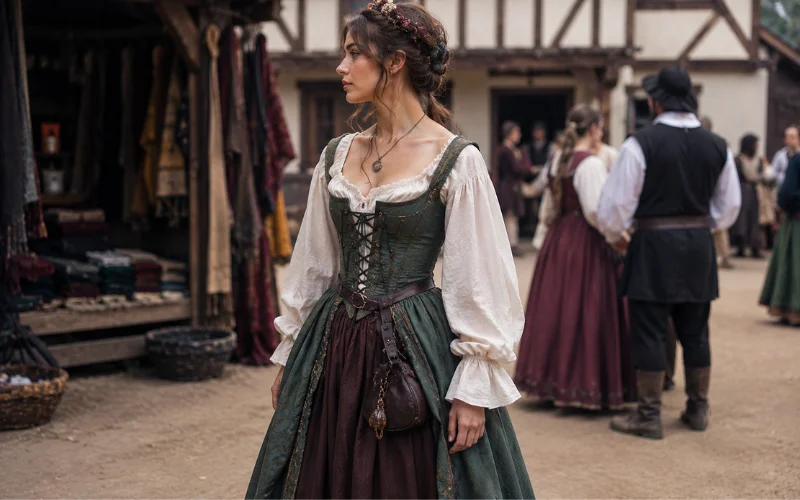
Most people’s first attempt at a Renaissance outfit fails for one simple reason: they buy a single “costume” garment instead of building separate layers. A one-piece costume dress can look flat and one-dimensional next to an outfit built from a chemise, bodice, and overskirt, because the single garment has no structural depth — no visible layering, no waist definition, no movement between pieces.
Historically, Renaissance dress relied on layering for practical reasons: a linen chemise protected outer garments from sweat and skin oils, a fitted bodice or doublet shaped the torso, and an overdress or cloak added warmth and visual status. Each layer also signaled something — a peasant’s renaissance outfit used plain wool and linen, while a noble’s version layered velvet, brocade, and trim over the same basic structure. This is exactly why a layered Renaissance outfit still looks more convincing today: it mirrors a genuine historical logic, not just a costume designer’s guess.
Modern Renaissance outfit makers (and the better Renaissance faire vendors) understand this, which is why their best-selling pieces are sold as separates — chemises, bodices, skirts, and cloaks — rather than as single fused costumes.
How to Build a Renaissance Outfit Step by Step
Choose your character or role first
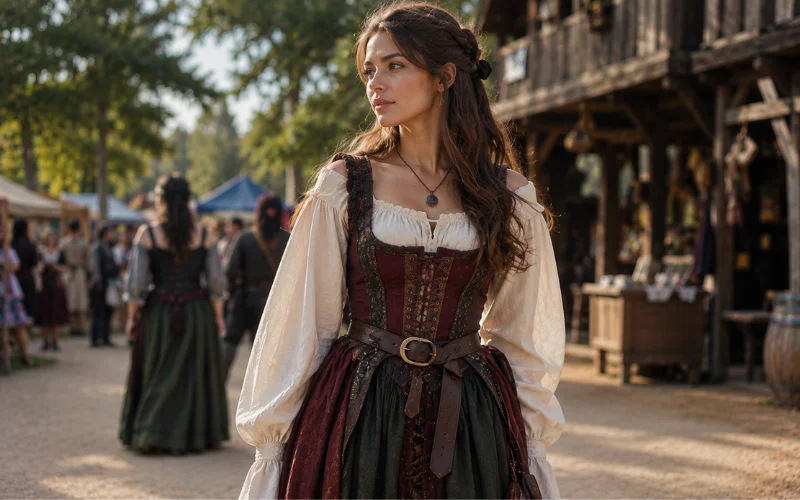
A peasant, noble, pirate, or fantasy-inspired Renaissance outfit each calls for different fabric and color choices, so decide this before buying anything — it will save you from mismatched pieces later.
Start with the base layer
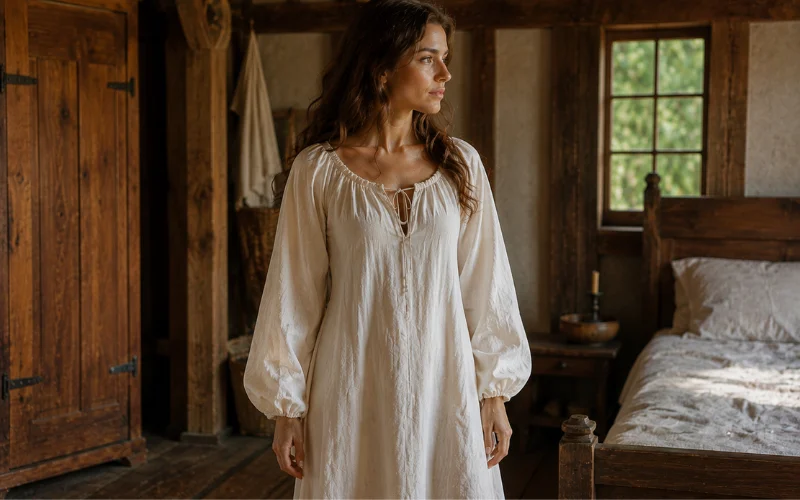
For women, this is a chemise or shift; for men, a simple shirt. Choose breathable natural fabric (cotton or linen) so the rest of your Renaissance outfit stays comfortable for a full day outdoors.
Add the structural middle layer
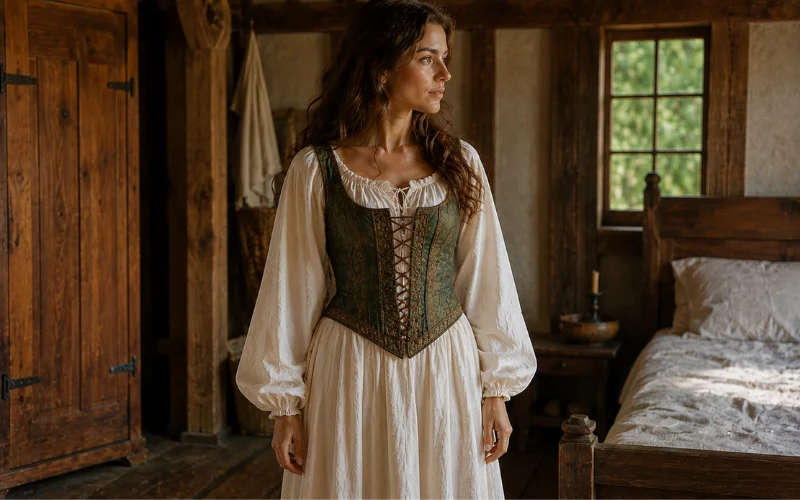
A bodice, corset, or vest for women; a doublet or vest for men. This layer shapes the silhouette and is where most of the “Renaissance” visual identity comes from.
Layer the bottom half
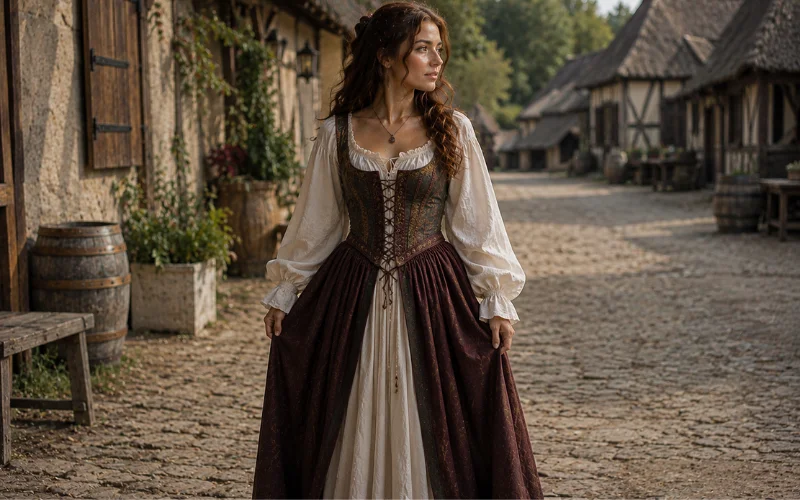
A full skirt or split skirt for women, fitted trousers or breeches for men. Longer, fuller skirts photograph and move better than short ones for this style.
Add an outer layer
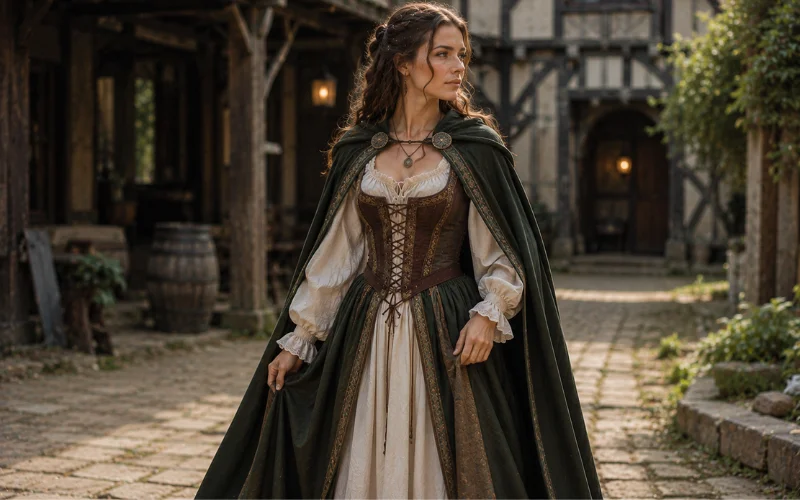
An overdress, surcoat, vest, or cloak finishes the silhouette and adds the color-blocking or trim detail that makes a Renaissance outfit look complete rather than half-finished.
Finish with accessories
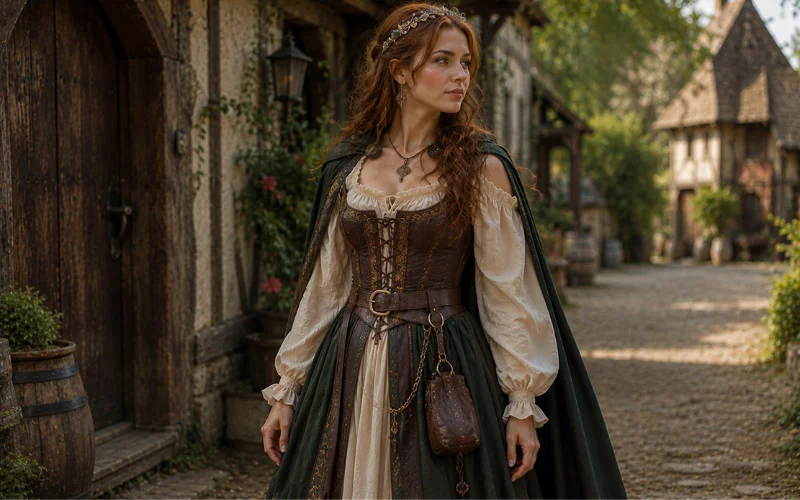
A leather belt, pouch, headwear, and jewelry are not optional extras — they’re what most experienced Renaissance faire attendees consider the final 20% that makes an outfit look finished.
Renaissance Outfit Components at a Glance
| Layer | Women’s Piece | Men’s Piece | Purpose |
|---|---|---|---|
| Base | Chemise / shift | Linen shirt | Comfort, breathability, hygiene layer |
| Middle | Bodice or corset | Doublet or vest | Shapes the torso, adds structure |
| Bottom | Full or split skirt | Breeches or trousers | Volume, movement, period silhouette |
| Outer | Overdress / surcoat | Cloak / tabard | Status, color, finishing layer |
| Accessories | Belt, pouch, headpiece | Belt, pouch, hat | Completes the look, adds function |
Alternative Solutions by Need
Different people search for a Renaissance outfit for different reasons. Here’s how to adjust your approach depending on what’s actually driving the search.
If you’re attending your first Renaissance faire on a tight budget
Skip buying a full costume set. Thrift a sleeveless dress in a solid color, cut it open down the center front, add lacing eyelets, and wear it over a simple base layer as an overdress. This single DIY trick recreates the layered look of a much more expensive Renaissance outfit for a fraction of the cost.
If you want a historically accurate Renaissance outfit
Prioritize natural fibers (wool, linen, cotton, and silk blends) over synthetic costume fabric, and choose muted, earth-toned colors for lower-status characters or deeper jewel tones for nobility — but avoid bright synthetic colors like neon pink, which didn’t exist as period dyes.
If you want a Renaissance outfit for a themed party rather than a faire
You can lean more decorative and less historically strict — velvet, lace, and rich color combinations will photograph well without needing full historical accuracy, since a party crowd generally isn’t judging garment construction the way faire regulars might.
If you’re building a Renaissance outfit for a couple or family
Coordinate through color and trim rather than matching outfits exactly. A shared color palette (e.g., burgundy and gold across different garment styles) reads as more intentional than identical costumes, and lets each person’s outfit reflect a different character or role.
If you have limited sewing skills
Buy your base layer and bottom layer pre-made, and reserve your DIY effort for the overdress or accessories only. This keeps the project achievable while still letting you customize the most visible, character-defining part of the outfit.
Frequently Asked Questions
1. What is a Renaissance outfit supposed to include?
At minimum, a base layer (chemise or shirt), a bottom layer (skirt or trousers), and ideally a middle structural layer (bodice or doublet) plus an outer layer and accessories like a belt and headwear.
2. Is “garb” the same as a Renaissance outfit?
“Garb” is the term Renaissance faire communities use for historically-inspired attire, while “costume” usually implies something less historically grounded. The two overlap, but garb generally signals more attention to period accuracy.
3. What fabrics work best for a Renaissance outfit?
Linen, cotton, wool, and silk blends are the standard choices because they were the actual materials used historically, and they also breathe better than polyester during long days outdoors.
4. What colors are period-appropriate for a Renaissance outfit?
Muted earth tones (brown, rust, moss green, cream) suit working-class characters, while deep jewel tones (burgundy, forest green, navy) suit merchant or noble characters. Bright neon shades should generally be avoided for historical accuracy.
5. Can I build a Renaissance outfit without sewing?
Yes. Many pieces can be assembled from pre-made separates, thrifted dresses repurposed as overdresses, and accessories like belts and pouches that require no sewing at all.
6. How much should a full Renaissance outfit cost?
A budget DIY Renaissance outfit can come together for under $50 using thrifted pieces, while a fully tailored, multi-layer ensemble with quality fabric can run several hundred dollars depending on detailing.
7. What’s the difference between a men’s and women’s Renaissance outfit?
Women’s outfits typically center on a chemise, bodice, and skirt combination, while men’s outfits typically pair a shirt and doublet with breeches or trousers — but both follow the same core layering logic.
8. What accessories complete a Renaissance outfit?
A leather belt (often with a pouch attached), headwear appropriate to your character’s status, and simple jewelry are the most commonly cited finishing touches among experienced Renaissance faire attendees.
9. Can a Renaissance outfit be both historically accurate and comfortable?
Yes — natural breathable fabrics, adjustable lacing instead of rigid boning, and layering pieces that can be removed as temperatures change all support comfort without sacrificing the period look.
10. What’s the easiest way to choose a Renaissance outfit style?
Decide on a character or social role first (peasant, merchant, noble, or fantasy-inspired) since this single decision will guide every other choice — fabric, color, trim, and accessories — and prevent a mismatched final look.
Conclusion
A great Renaissance outfit isn’t about finding one perfect costume — it’s about building the right combination of layers: a breathable base, a structured middle layer, a flowing bottom piece, and a finishing outer layer with the right accessories. Whether you’re working with a tight budget and a thrifted dress or investing in a fully tailored ensemble, that same layering logic is what makes the final look read as authentic rather than generic. Once you understand the structure, putting together your own Renaissance outfit becomes far less intimidating — and a lot more fun to plan.