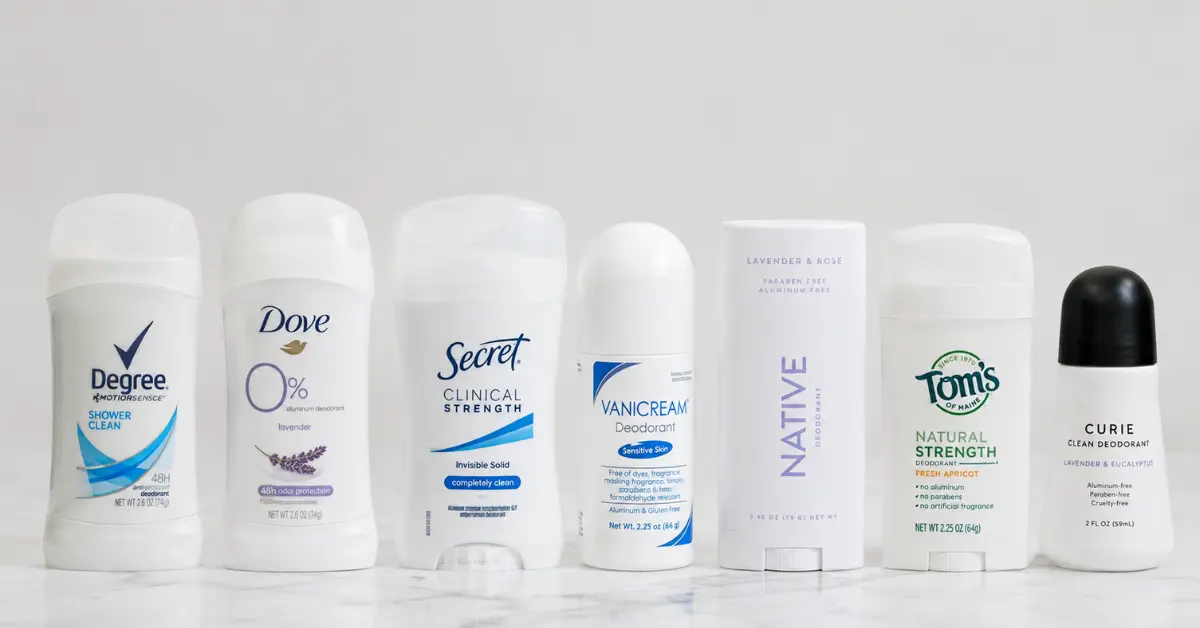
The best deodorant for women depends on three things: how much you sweat, how sensitive your skin is, and whether odor or wetness is your bigger concern. Here’s the short answer before we get into the why:
| If you… | Best deodorant type | Try this category |
|---|---|---|
| Sweat heavily / need all-day protection | Clinical-strength antiperspirant | Secret Clinical Strength, Certain Dri |
| Have sensitive or reactive skin | Fragrance-free, aluminum-free deodorant | Vanicream, Dove 0% Aluminum Sensitive |
| Want a natural formula without irritation | Baking-soda-free natural deodorant | Native Sensitive, Each & Every |
| Mainly deal with odor, not wetness | Odor-neutralizing deodorant | Tom’s of Maine, Schmidt’s |
| Are switching from antiperspirant to natural | Transition-friendly formula | Myro, Curie |
| Want both sweat and odor control daily | Antiperspirant deodorant combo | Dove Advanced Care, Secret Outlast |
There’s no single “best” deodorant for every woman, and any article that tells you otherwise is oversimplifying. What actually matters is matching the formula to your skin and sweat pattern — which is exactly what the rest of this guide walks you through, including the parts most deodorant guides skip entirely: how sweat glands actually work, why “natural” deodorants seem to stop working after a few days, and how to switch formulas without the dreaded detox breakout.
Why Choosing the Right Deodorant for Women Is Trickier Than It Sounds
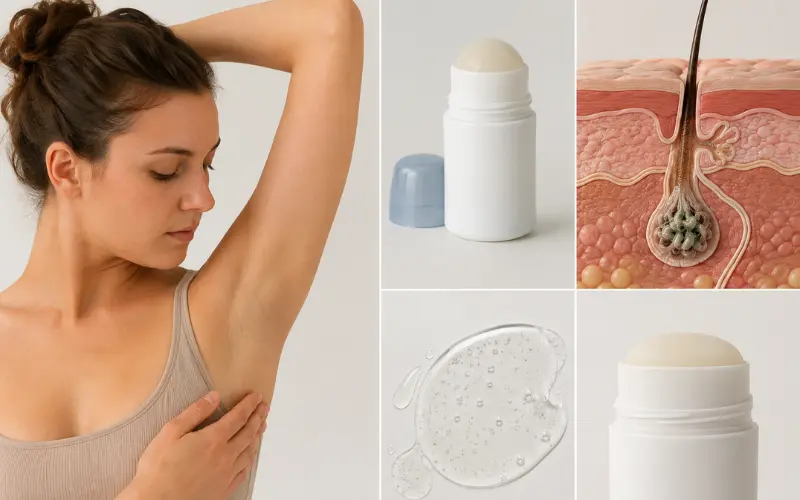
Most buying guides treat deodorant like a one-size-fits-all product. It isn’t, and here’s the actual biology behind why.
Women have roughly 2–4 million sweat glands distributed across the body, and the underarm specifically contains a dense mix of two types: eccrine glands, which produce a thin, mostly odorless sweat for temperature regulation, and apocrine glands, which produce a thicker, protein-rich sweat that only smells once bacteria on your skin start breaking it down. This is the actual source of body odor — not sweat itself, but bacterial metabolism of apocrine secretions.
This distinction is why deodorant and antiperspirant aren’t interchangeable, even though they sit on the same drugstore shelf:
- Antiperspirants contain aluminum-based compounds (usually aluminum chlorohydrate or aluminum zirconium) that temporarily form a gel plug inside the sweat duct, physically reducing how much moisture reaches the skin’s surface.
- Deodorants don’t block sweat at all. They work by killing or limiting odor-causing bacteria (often with alcohol or antimicrobial agents) and masking residual smell with fragrance.
If you’re someone who sweats through shirts by 10 a.m., a deodorant alone won’t solve that — you need an antiperspirant. If your main issue is smell rather than visible wetness, a fragrance-forward deodorant will outperform a heavy-duty antiperspirant and won’t leave white residue or that tight, “plugged” feeling some women dislike.
There’s also a hormonal layer that most competitor articles never mention: sweat composition and intensity shift across the menstrual cycle, during pregnancy, and through perimenopause, because apocrine gland activity is sensitive to estrogen and progesterone fluctuations. That’s part of why a deodorant that worked perfectly for years can suddenly feel inadequate — it’s not the product failing, it’s your body chemistry changing.
How to Pick the Best Deodorant for Women: Step-by-Step
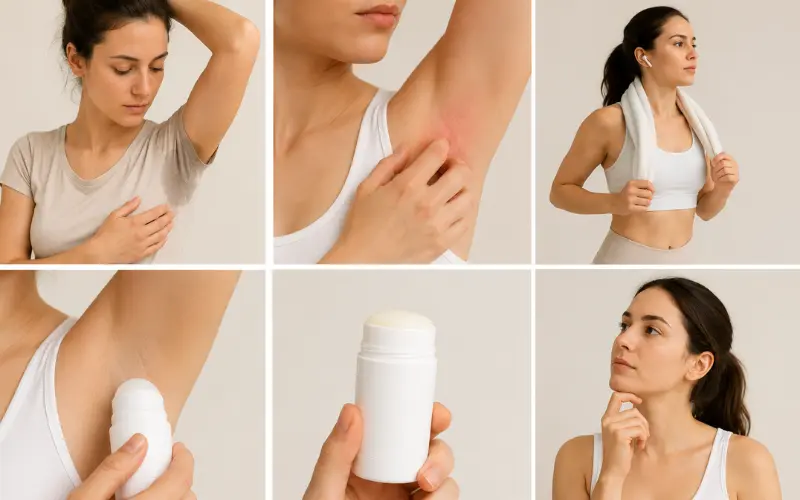
Here’s the actual decision process, laid out so you’re not guessing at the store.
Step 1: Identify your real sweat level.
Be honest about this one. If you regularly see visible wet marks by midday or need to reapply, you’re in antiperspirant territory. If you stay relatively dry but worry about smell, a deodorant-only formula will work fine.
Step 2: Check your skin’s reaction history.
If you’ve ever broken out in a rash, redness, or itching after switching deodorants, look specifically for “fragrance-free” and “aluminum-free” on the label — not just “natural,” which is an unregulated marketing term with no fixed meaning. Baking soda, a common natural-deodorant ingredient, is alkaline and is the single most common cause of underarm irritation in switchers, so if you’ve reacted before, look for baking-soda-free natural formulas specifically.
Step 3: Match the formula to your activity level.
Daily desk job: a standard antiperspirant deodorant combo is usually enough. Frequent workouts, hot climates, or high-stress jobs: go clinical strength, and consider reapplying after intense sweating rather than expecting one morning application to last 16 hours.
Step 4: Apply at the right time.
This is the detail almost every deodorant guide skips: dermatologists recommend applying antiperspirant at night, not just in the morning. Sweat ducts are least active while you sleep, which lets the aluminum compounds form a more effective plug before the morning’s sweat production starts. Applying only in the morning, right before your glands ramp up, is part of why some women feel like their antiperspirant “stops working.”
Step 5: If switching to natural deodorant, expect a transition period.
Your underarm bacteria have adapted to whatever you’ve used for years. Switching to a new formula — especially going from antiperspirant to natural deodorant — often causes a 1–2 week adjustment window of increased odor or sweat as your skin’s microbiome rebalances. This isn’t your body “detoxing,” despite what some natural-deodorant marketing claims; it’s a real, temporary microbial shift, and most women find it resolves on its own within two weeks.
Step 6: Reassess every few years, not just when something fails.
Because hormonal shifts change sweat composition, the deodorant for women that worked great in your twenties may need an upgrade in your thirties or during perimenopause. This is normal and not a sign you’re doing anything wrong.
Best Deodorant for Women by Specific Need
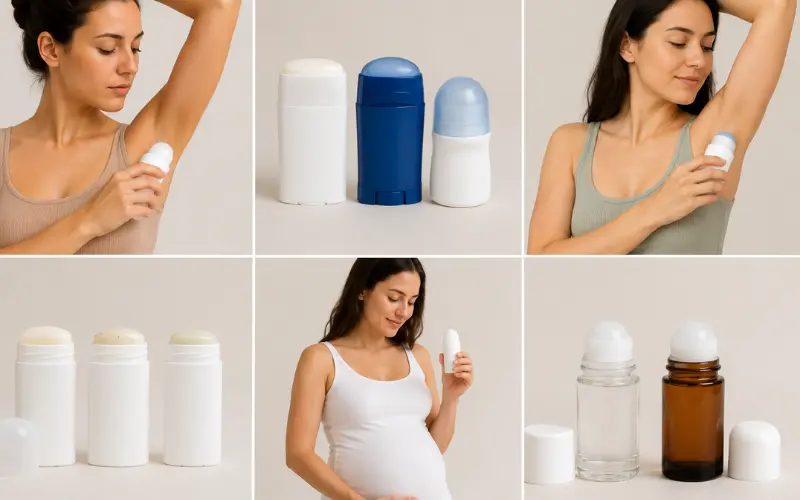
- For sensitive skin: Look for fragrance-free, dye-free, and aluminum-free formulas. Vanicream and Dove’s 0% Aluminum Sensitive line are formulated specifically to minimize the alcohol and fragrance compounds most likely to trigger reactions.
- For heavy sweating: Clinical-strength antiperspirants with a higher concentration of aluminum zirconium (like Certain Dri or Secret Clinical Strength) provide stronger, longer protection than standard-strength versions, and are genuinely worth the slight increase in initial tightness or tingling some people notice.
- For natural/aluminum-free preference: Each & Every and Native’s sensitive lines use magnesium or arrowroot instead of baking soda, which tends to be gentler for reactive skin while still offering decent odor control.
- For postpartum or pregnant women: Fragrance-free, aluminum-free options are generally the safer default during pregnancy, since heightened sensitivity to smell and skin reactivity are both common — check with your OB if you have specific ingredient concerns.
- For odor without heavy sweating: Tom’s of Maine and Schmidt’s unscented lines focus purely on antibacterial odor control without the occlusive aluminum layer, which some women prefer for everyday comfort.
Alternative Solutions If Deodorant Alone Isn’t Cutting It
If you’ve tried multiple deodorants for women and nothing seems to keep up, the issue may not be the product at all:
- Excessive sweating (hyperhidrosis) affects a meaningful percentage of women and isn’t something a standard antiperspirant is designed to handle. If you’re soaking through clothing despite clinical-strength products, talk to a dermatologist about prescription-strength options like topical glycopyrrolate or, in more severe cases, Botox injections for the underarm, which block the nerve signals that trigger sweat glands.
- Diet and hydration genuinely affect body odor intensity — sulfur-heavy foods (garlic, onions, cruciferous vegetables) and dehydration both concentrate apocrine secretions.
- Fabric choice matters more than people think. Synthetic fabrics trap moisture and bacteria against skin far more than breathable cotton or moisture-wicking athletic fabrics, which is why the same deodorant can perform very differently depending on what you’re wearing.
- Shaving timing affects irritation risk. Applying deodorant immediately after shaving, when skin is most vulnerable, is a common and avoidable cause of burning or razor-bump-like irritation — waiting even 15–20 minutes makes a real difference.
Best Deodorant for Women: FAQs
1. What is the best deodorant for women overall?
There isn’t one universal winner — the right choice depends on your sweat level and skin sensitivity. Most women do well starting with a standard antiperspirant deodorant combo like Dove Advanced Care or Secret Outlast, then adjusting toward clinical strength or aluminum-free depending on how their skin reacts.
2. What’s the difference between deodorant and antiperspirant?
Antiperspirants contain aluminum compounds that temporarily plug sweat ducts to reduce moisture. Deodorants don’t block sweat at all — they kill odor-causing bacteria and mask smell with fragrance. If wetness is your main concern, you need an antiperspirant, not just a deodorant.
3. Is aluminum in antiperspirant actually safe?
Current research hasn’t found a confirmed link between aluminum-based antiperspirants and breast cancer or Alzheimer’s, despite ongoing online concern. If you’d still rather avoid it, fragrance-free, aluminum-free deodorants are a reasonable alternative — just expect them to control odor rather than wetness.
4. Why does natural deodorant stop working after a few days?
It’s usually not actually failing — your skin’s bacterial balance is adjusting to the new formula. This transition period typically causes increased odor or sweat for one to two weeks before things normalize, especially if you’re switching from antiperspirant to natural deodorant.
5. Why do I sweat more with some deodorants than others?
Sweat output is tied to hormone levels, which shift across the menstrual cycle, pregnancy, and perimenopause. A deodorant that worked fine for years can suddenly feel inadequate simply because your body’s apocrine gland activity has changed, not because the product changed.
6. Should I apply deodorant in the morning or at night?
Dermatologists recommend applying antiperspirant at night. Sweat ducts are least active during sleep, which gives the aluminum compounds time to form a more effective seal before your glands ramp up the next day.
7. What’s the best deodorant for women with sensitive skin?
Look for fragrance-free and aluminum-free formulas like Vanicream or Dove’s 0% Aluminum Sensitive line. Avoid baking-soda-based natural deodorants if you’ve reacted to them before, since baking soda’s alkalinity is the most common cause of underarm irritation.
8. Can deodorant cause a rash or burning after shaving?
Yes — applying deodorant immediately after shaving, while skin is most vulnerable, is a common cause of stinging or irritation. Waiting 15–20 minutes after shaving before applying usually solves this.
9. What should I use if I sweat heavily despite using antiperspirant?
If clinical-strength antiperspirant isn’t enough, talk to a dermatologist about prescription options like topical glycopyrrolate or Botox injections for the underarm, which block the nerve signals that trigger excessive sweating (hyperhidrosis).
10. Does diet affect body odor and sweat?
Yes. Sulfur-heavy foods like garlic, onions, and cruciferous vegetables, along with dehydration, can intensify body odor by concentrating apocrine gland secretions. Fabric choice matters too — synthetic materials trap moisture and bacteria more than breathable cotton or moisture-wicking fabrics.
Final Thoughts
There isn’t one best deodorant for women that works universally, because sweat glands, skin sensitivity, and hormones don’t work universally either. Start by being honest about whether you’re managing wetness, odor, or both, check your skin’s irritation history before chasing “natural” labels, and remember that timing — applying antiperspirant at night, waiting after shaving — often matters as much as the product itself. Get those fundamentals right, and most women find their ideal deodorant within one or two tries, not a dozen.