A great bronzer can still look wrong with the wrong brush. That’s the part most shopping guides skip. They’ll tell you which brush is soft or which one looks nice in a flat lay, but they rarely explain how brush shape, your face shape, and your bronzer formula all need to work together to actually look natural.
This guide covers all of it: how to pick the best bronzer brush for your formula, how brush shape should change based on your face shape, and how to keep the brush performing well long after you buy it.
Why the Right Brush Matters More Than the Right Bronzer
It’s tempting to think the bronzer itself does most of the work. In practice, the brush controls three things a bronzer alone can’t: placement precision, product intensity, and blend quality. A dense, tightly packed brush deposits more pigment and can look heavy-handed. A softer, more diffused brush lays down a lighter veil that’s easier to build up gradually. The same bronzer can look completely different depending on which brush applies it.
Professional makeup artists often keep two or three bronzer brushes in rotation for exactly this reason: one for a light, natural warmth and one for deeper, more defined contouring. If you’ve ever applied bronzer and felt like it looked muddy or uneven no matter how carefully you blended, the brush is often the actual issue, not your technique.
Match Your Brush to Your Bronzer Formula First
Before anything else, figure out which formula you’re using, since this determines which brush will actually work.
Powder bronzer
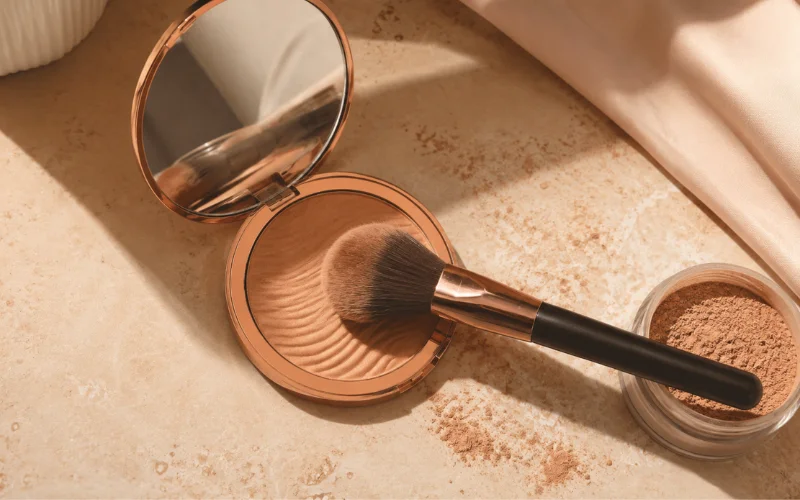
needs a brush with natural or natural-synthetic blend bristles that are soft but still have enough structure to pick up and distribute product evenly. Look for a slightly rounded or angled head with medium density. Too fluffy, and the brush won’t pick up enough pigment. Too dense, and it deposits too much at once.
Cream or liquid bronzer
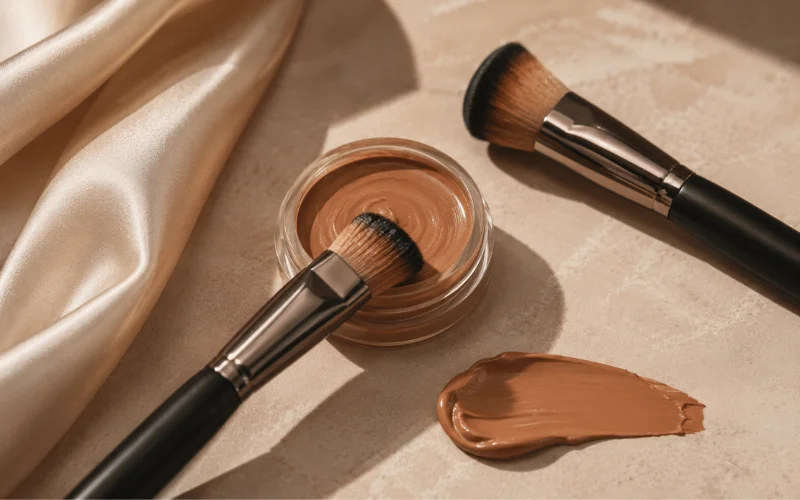
needs a completely different brush: a firmer, more tightly packed synthetic brush, often flat or slightly tapered, that pushes product into the skin rather than just sweeping it across the surface. Using a fluffy powder brush with a cream formula usually just absorbs the product into the bristles instead of applying it to your face.
Stick bronzer
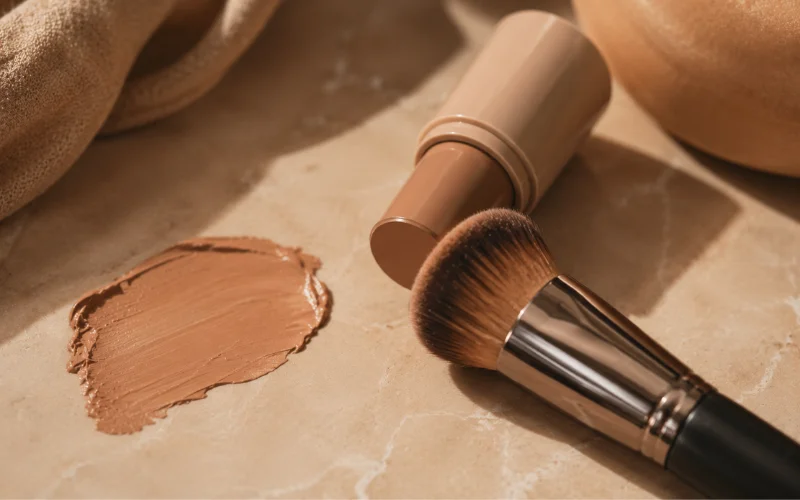
works well with a dense, slightly domed synthetic brush for blending after you’ve applied the product directly from the stick, or it can be applied with clean fingers and set with a light powder brush pass afterward.
If you only own one brush and switch between formulas, a dual-density synthetic brush, firmer at the base with a softer tip, is the most practical compromise, though a dedicated brush per formula will always perform better.
The Face Shape Connection Almost Nobody Talks About
Here’s the piece most bronzer brush guides leave out entirely: brush shape and size should shift based on your face shape, not just your formula. Bronzer is meant to mimic where the sun would naturally hit your face, and that placement genuinely changes depending on your bone structure.
Round faces
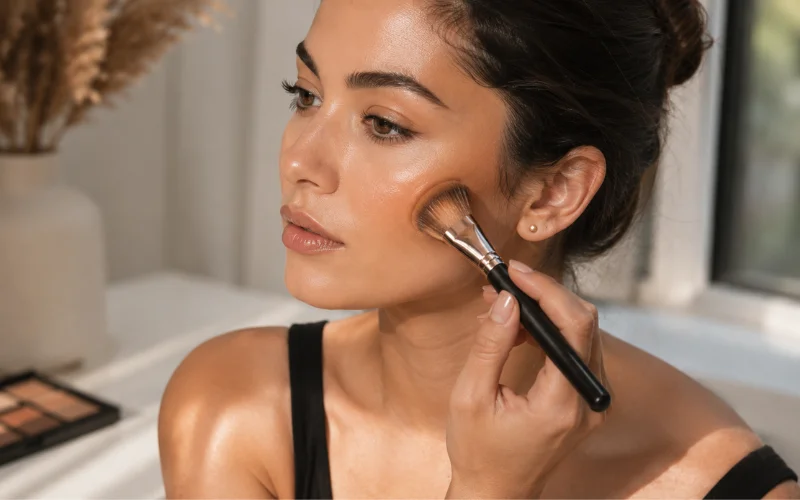
benefit from an angled brush that allows precise placement along the hollows of the cheeks and the outer edges of the forehead, creating definition rather than adding warmth evenly across a already rounder silhouette.
Oval faces
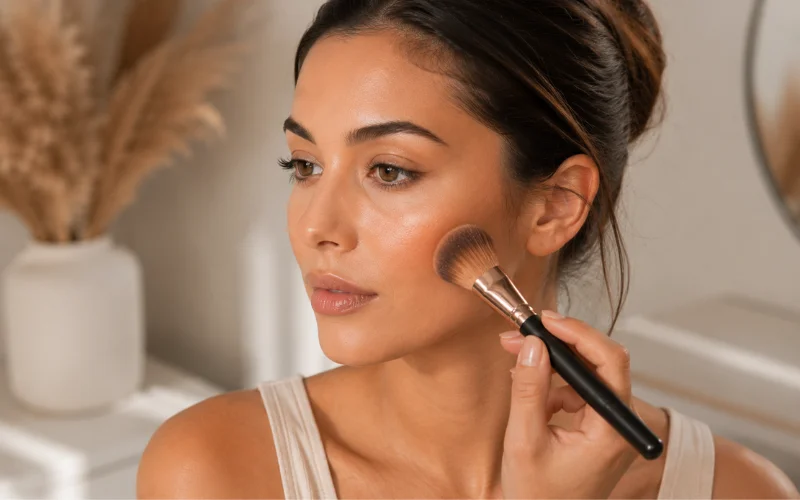
have the most flexibility, since this shape is considered the template most bronzer techniques are built around. A medium, slightly rounded brush works well for a classic three-shape placement: forehead, cheeks, and jawline.
Square faces
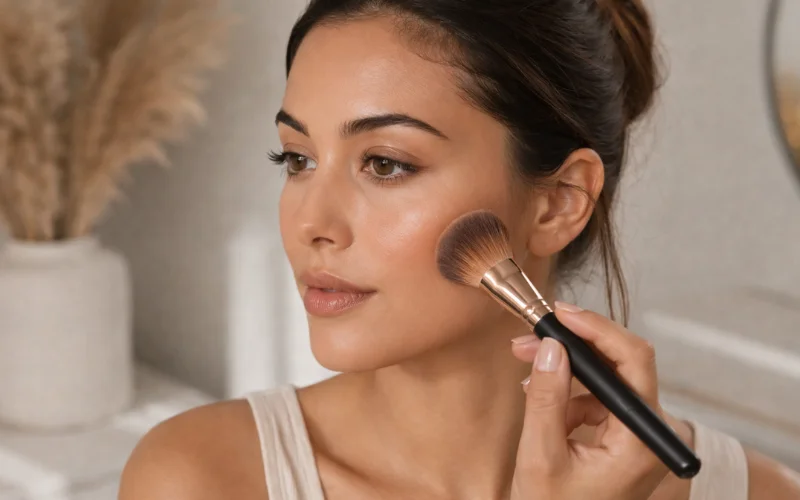
do well with a softer, more rounded brush to blend and soften strong jaw and forehead corners, rather than an angled brush that can emphasize sharp angles further.
Heart-shaped faces
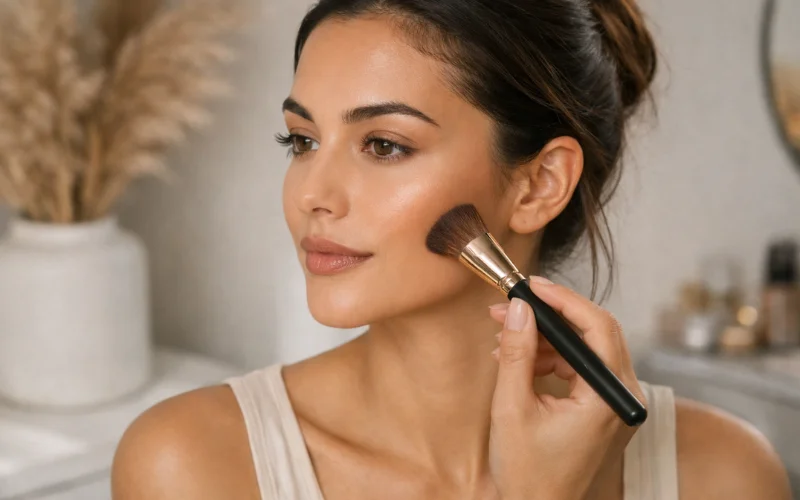
benefit from concentrating bronzer along the jawline and lower cheeks using a smaller, more precise angled brush, balancing a narrower chin against a wider forehead.
Long or rectangular faces
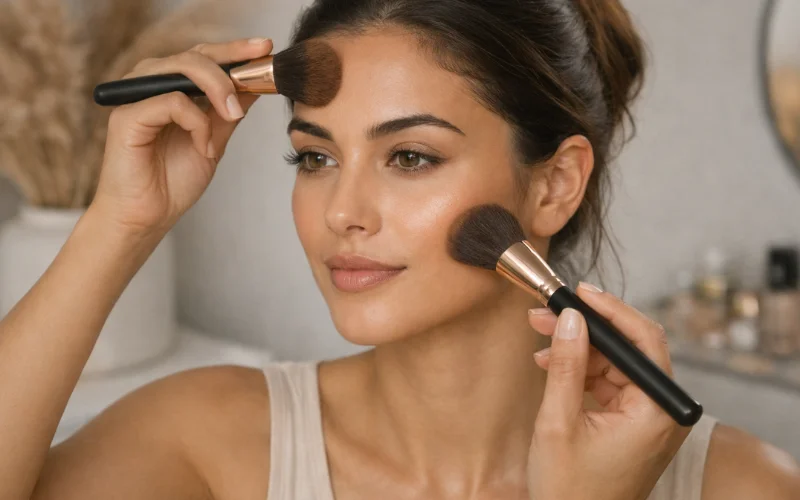
do better with horizontal sweeping motions using a wider, fluffier brush across the forehead and just below the cheekbones, which helps visually shorten the face rather than lengthen it further.
If you’ve been applying bronzer the same way for years regardless of these differences, this is genuinely one of the highest-impact adjustments you can make, and it costs nothing beyond adjusting your existing technique.
Brush Shapes Explained
Angled brushes
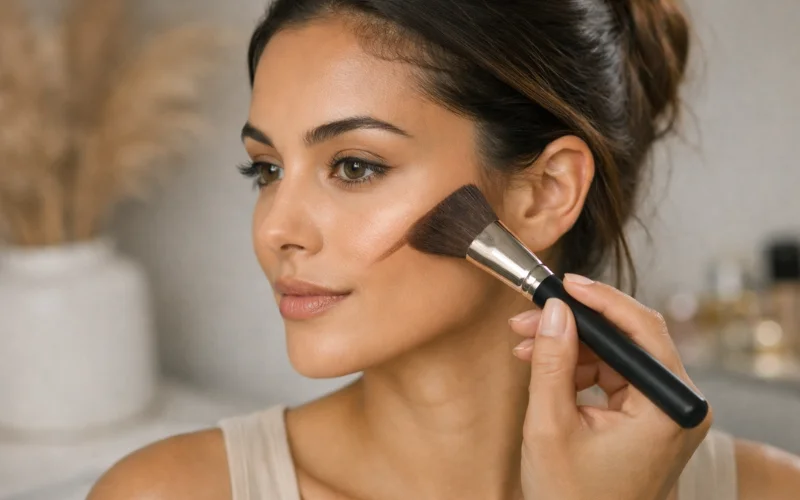
are built for precision. They excel at contouring along cheekbones and jawlines where you want a defined, deliberate line rather than an overall wash of color.
Domed or rounded brushes
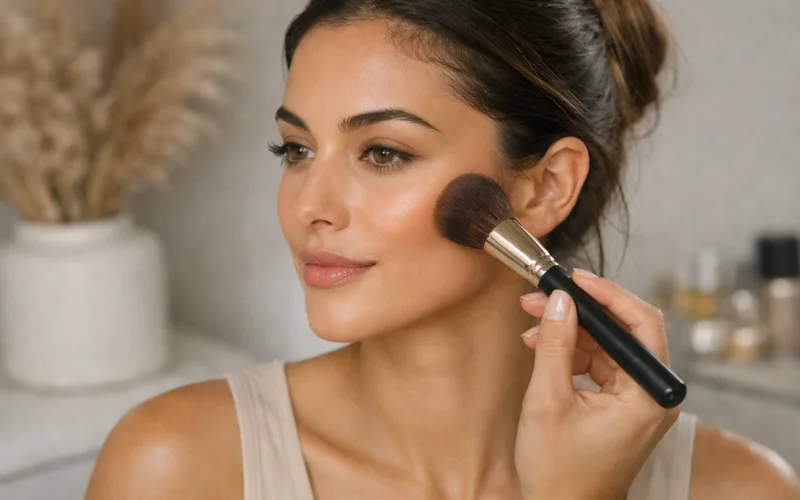
are the most versatile option for an all-over, natural bronzer application, since the rounded shape naturally follows the curve of the cheek and blends edges softly.
Flat top brushes
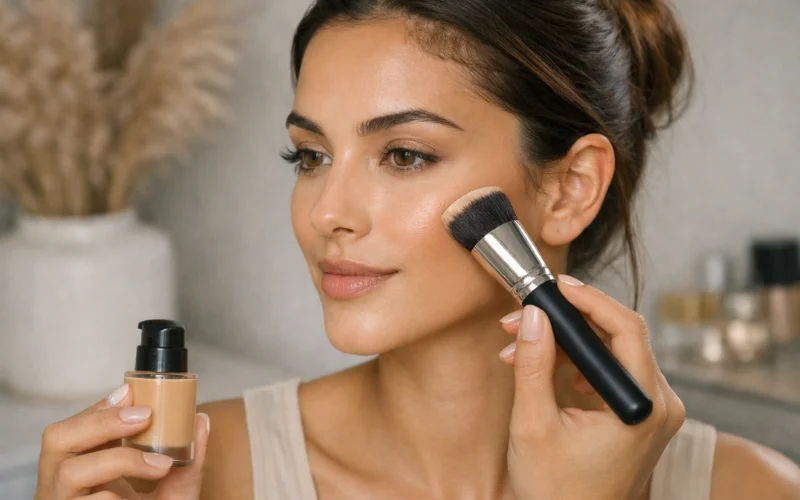
work best for cream and liquid formulas, since the flat surface presses product into skin rather than dusting it on top.
Tapered or pointed brushes
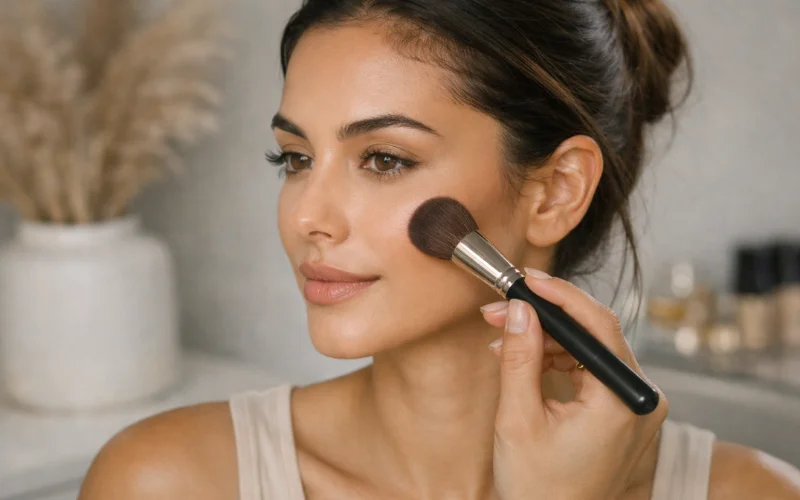
allow detailed placement in smaller areas, like the sides of the nose or under the cheekbone, and work well for more advanced contouring techniques.
How to Actually Apply Bronzer With Your Brush
- Tap off excess product before touching your face. This single habit prevents the single most common bronzer mistake: too much product landing in one spot.
- Start with light layers. It’s far easier to build up bronzer gradually than to remove excess once it’s blended into foundation.
- Follow the natural “3” shape. Sweep along the forehead, down the cheekbone, and along the jawline, following where sunlight would naturally hit your face.
- Blend edges with a clean, fluffy brush. Even a well-placed bronzer application can look harsh without a final soft blending pass to remove any visible lines.
- Check your work in natural light. Indoor lighting, especially warm artificial light, can make bronzer look more blended than it actually is until you step outside or near a window.
Brush Care: The Part That Affects Your Skin, Not Just Your Makeup
A great bronzer brush loses its performance quickly if it isn’t cleaned properly, and this matters for skin health, not just makeup quality.
- Clean powder brushes every one to two weeks with a gentle brush shampoo or mild soap, and let them air dry flat or at a slight downward angle so water doesn’t pool in the ferrule and loosen the glue holding bristles in place.
- Clean cream and liquid brushes more frequently, ideally after every two to three uses, since these formulas build up in bristles faster and can harbor bacteria more easily than dry powder residue.
- Reshape bristles while damp, gently pressing them back into their original form, since a brush that dries misshapen will apply product unevenly no matter how good the brush originally was.
- Replace brushes showing shedding or fraying, generally every one to two years with regular use, since a brush losing bristles will leave visible fibers in your makeup and lose its precision over time.
Skipping regular cleaning doesn’t just affect how bronzer looks. Bacteria and oil buildup on a brush can contribute to breakouts, particularly along the cheeks and jawline where bronzer is applied directly and repeatedly.
What to Look for When Shopping
- Bristle material suited to your formula, natural or natural-synthetic blends for powder, dense synthetic for cream and liquid.
- A handle length and grip that feels comfortable, since a brush that’s awkward to hold leads to less precise application regardless of bristle quality.
- A shape that matches your face shape and preferred technique, rather than choosing based on appearance alone.
- A secure ferrule with no visible glue or looseness, which is often the first sign of a brush that won’t hold up over repeated washing.
Frequently Asked Questions
1. Can I use the same best bronzer brush for bronzer and blush?
You can, but using a dedicated best bronzer brush for bronzer and a separate brush for blush gives more precise, consistent results since each product often requires different placement and intensity.
2. What’s the difference between the best bronzer brush and a contour brush?
The best bronzer brush is typically slightly larger and softer for creating an overall warm wash of color, while a contour brush is denser and more angled for precise, sculpted definition.
3. How do I know if my best bronzer brush is too small or too large for my face?
The best bronzer brush should cover your cheek comfortably in one or two swipes without requiring repeated wrist movement, making application even and natural.
4. Should I choose a natural or synthetic best bronzer brush?
A natural or natural-synthetic blend is usually the best bronzer brush for powder formulas, while fully synthetic bristles work better with cream and liquid bronzers.
5. How often should I replace my best bronzer brush?
A quality best bronzer brush can last one to two years with proper care and regular cleaning. Replace it sooner if you notice shedding, fraying, or a loss of shape.
6. Can the wrong best bronzer brush make my bronzer look orange or muddy?
Yes. A best bronzer brush with the right density helps distribute product evenly, while the wrong brush can apply too much bronzer at once, creating a muddy or unnatural finish.
7. What shape is the best bronzer brush for contouring versus all-over bronzer?
An angled best bronzer brush works well for contouring along the cheekbones and jawline, while a rounded or domed best bronzer brush is ideal for soft, all-over bronzer application.
8. How do I clean a best bronzer brush without damaging it?
Wash your best bronzer brush with a gentle brush cleanser or mild soap, avoid soaking the ferrule, and let it air dry flat or angled downward to protect the bristles and glue.
9. Does face shape affect how I use the best bronzer brush?
Yes. Using the best bronzer brush correctly depends on your face shape, since bronzer placement should mimic where natural sunlight would hit your specific bone structure.
10. Is a more expensive best bronzer brush actually worth it?
A high-quality best bronzer brush with durable bristles and a secure ferrule generally lasts longer, maintains its shape better, and provides a smoother application than cheaper alternatives.
Final Thoughts
The best bronzer brush isn’t a single universal answer. It depends on your formula, your face shape, and the specific look you’re going for. Matching brush density to your bronzer type solves the most common application problems, and adjusting your placement technique based on your face shape is one of the simplest upgrades you can make to a routine you may have been repeating the same way for years. Add consistent cleaning into the mix, and a good brush will perform well for years rather than months.