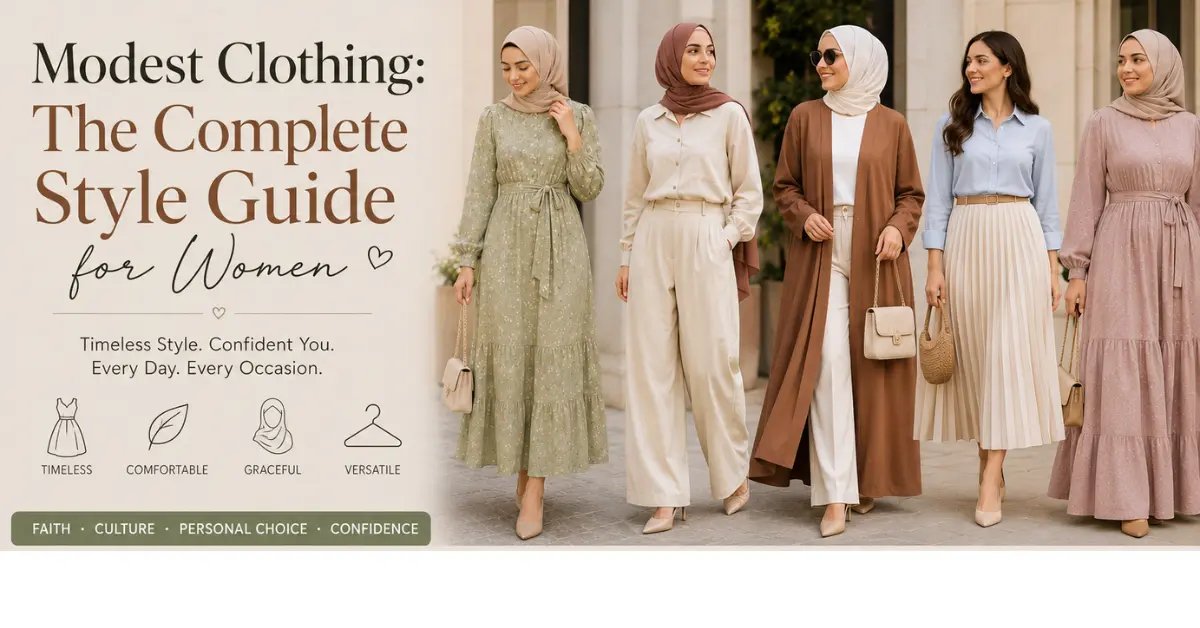
Modest clothing is not about hiding yourself. It is about dressing with intention — choosing styles that make you feel confident, comfortable, and completely yourself.
Whether you wear modest clothes for religious reasons, personal preference, or simply because you love the aesthetic, this guide covers everything you need to know. From finding the right fabrics to building a wardrobe that actually works, we break it all down in plain, simple terms.
What Is Modest Clothing?
Modest clothing refers to styles that provide more coverage than mainstream fashion — typically featuring longer hemlines, higher necklines, and looser silhouettes. But it is far more than a dress code.
For many women, modest dressing is a lifestyle. It blends faith, culture, and personal expression into an everyday choice. The word “modest” means something slightly different to everyone:
- A Muslim woman might prioritize a hijab-compatible neckline and loose-fit silhouettes.
- A Christian woman might look for knee-length or longer dresses and non-sheer fabrics.
- A woman with no religious motivation might simply prefer covered, elegant styles over revealing trends.
There is no single definition — and that is the beauty of it.
Why More Women Are Choosing Modest Fashion
Modest fashion has grown into a $350 billion global industry, and the numbers keep rising. Here is why so many women are embracing it:
1. It is timeless, not trendy.
Fast fashion comes and goes. Modest pieces — a well-cut maxi dress, a structured midi skirt, a quality layering top — stay relevant season after season.
2. It is genuinely versatile.
A long floral dress works at a family gathering, a work event, and a casual afternoon out. You spend less time changing outfits and more time living your day.
3. It puts comfort first.
Loose, breathable fabrics and relaxed silhouettes simply feel better on your body — especially during long days or warm weather.
4. It builds confidence.
Many women report feeling more confident in modest clothes. When you are not adjusting your hemline or pulling at your neckline, you can focus on the room.
The 7 Essential Pieces Every Modest Wardrobe Needs
You do not need a full wardrobe overhaul. Start with these seven building blocks and work from there.
1. The Maxi Dress
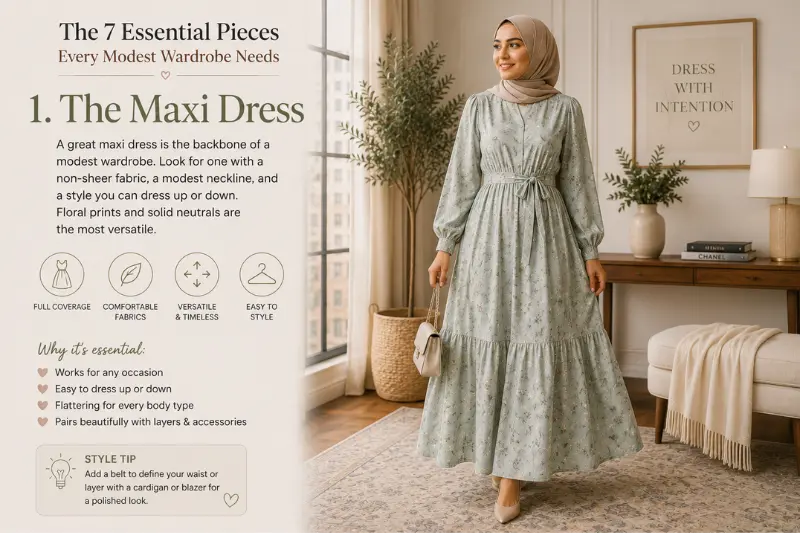
A great maxi dress is the backbone of a modest wardrobe. Look for one with a non-sheer fabric, a modest neckline, and a style you can dress up or down. Floral prints and solid neutrals are the most versatile.
2. The Midi Skirt
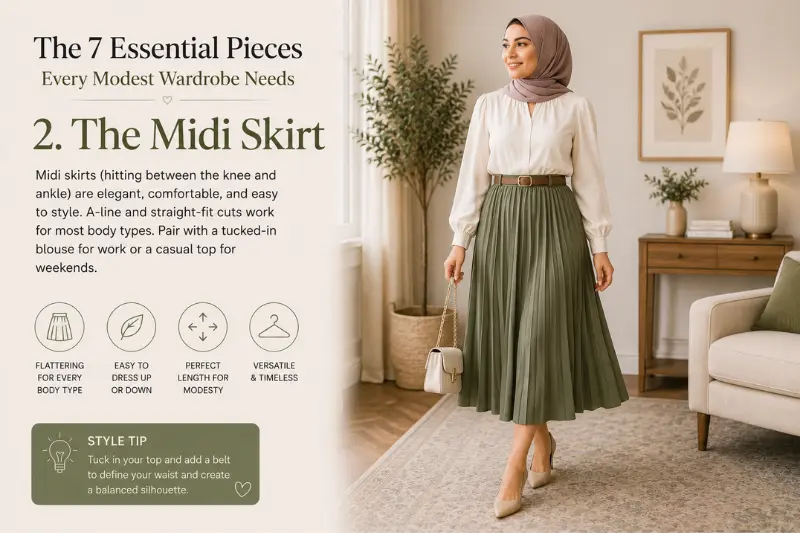
Midi skirts (hitting between the knee and ankle) are elegant, comfortable, and easy to style. A-line and straight-fit cuts work for most body types. Pair with a tucked-in blouse for work or a casual top for weekends.
3. Layering Tops
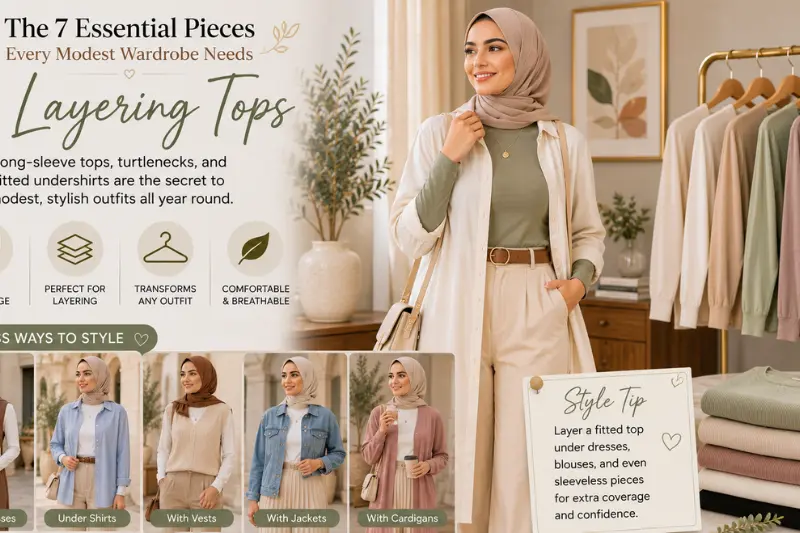
Long-sleeve undershirts, fitted turtlenecks, and long-line cardigans are quiet heroes of modest dressing. They transform short-sleeve dresses and low-cut tops into modest outfits instantly.
4. Wide-Leg or Straight-Fit Trousers
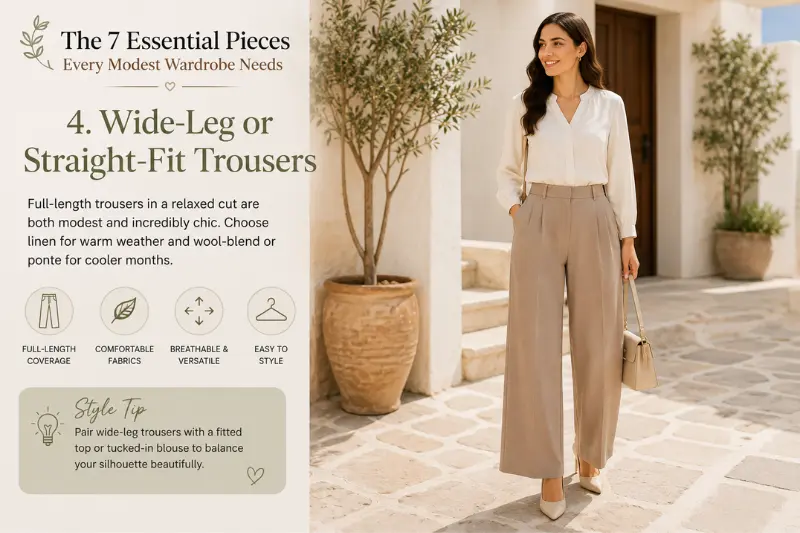
Full-length trousers in a relaxed cut are both modest and incredibly chic. Choose linen for warm weather and wool-blend or ponte for cooler months.
5. A Duster Cardigan or Maxi Cardigan
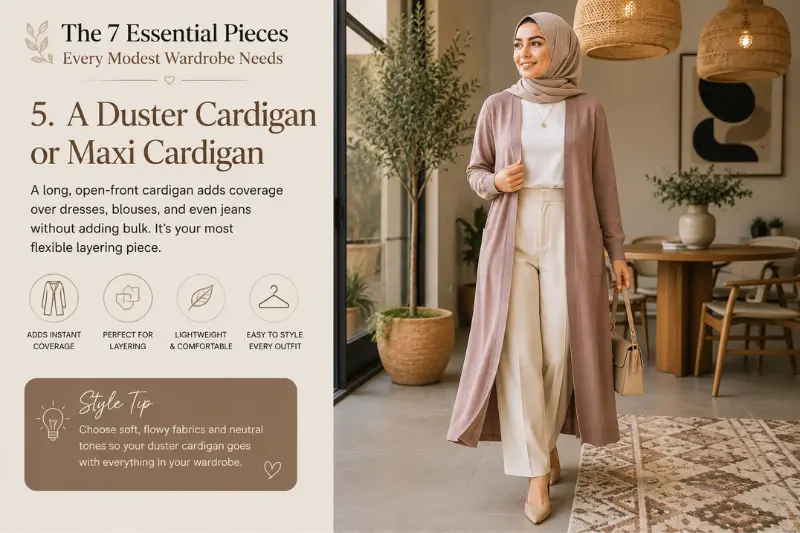
A long, open-front cardigan adds coverage over dresses, blouses, and even jeans without adding bulk. It is your most flexible layering piece.
6. The Button-Down Shirt
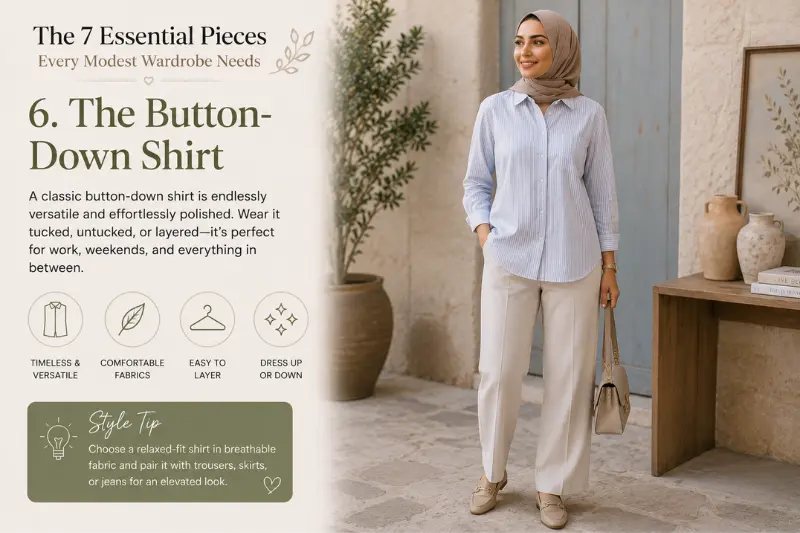
A classic button-down worn loose or tucked covers well and never looks frumpy. Opt for 100% cotton or a cotton-linen blend for breathability.
7. Modest Swimwear
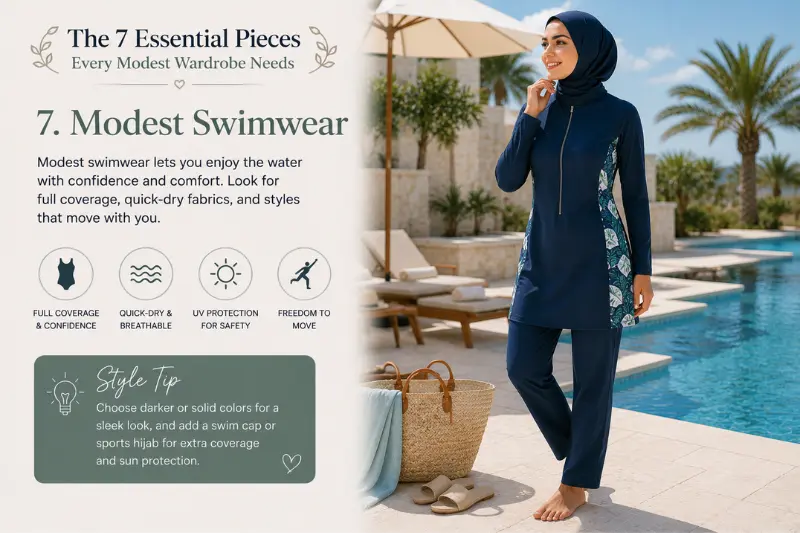
Modest swimwear — including swim skirts, full-coverage one-pieces, and burkinis — has expanded dramatically in recent years. You no longer have to sacrifice style to feel comfortable at the beach or pool.
How to Choose the Right Fabrics
This is the detail most modest fashion guides skip — but fabric choice makes or breaks your outfit.
Best fabrics for modest clothing:
| Fabric | Why It Works |
|---|---|
| Cotton | Breathable, opaque, easy to wash |
| Linen | Lightweight and airy for summer |
| Modal | Soft, drapes well, not clingy |
| Ponte knit | Structured, non-sheer, holds shape |
| Chiffon (lined) | Elegant and flowy when lined |
| Rayon | Comfortable and affordable |
Fabrics to avoid or watch:
- Jersey (unlined) — can cling to the body; check opacity before buying
- Sheer fabrics without lining — always test in natural light
- Thin polyester — often sheer and uncomfortable in heat
- Satin — beautiful but clingy and can be see-through
Pro tip: Always check a fabric against the light in the fitting room or near a window. What looks opaque indoors may not hold up outside.
Modest Clothing by Occasion
One of the biggest concerns women have is whether modest clothing works for every situation. It does — you just need the right pieces.
For Work
- Tailored wide-leg trousers + a long-sleeve blouse
- Midi pencil skirt + a structured blazer
- A modest wrap dress in a solid or subtle print
Avoid overly casual fabrics like cotton jersey at formal offices. Opt for ponte, crepe, or tailored cotton blends.
For Everyday / Casual
- A relaxed maxi dress with sneakers or sandals
- High-waist wide-leg jeans + a long blouse or tunic
- A casual midi skirt with a basic long-sleeve top
For Formal Events or Weddings
- A floor-length gown with long sleeves or a cape overlay
- A fitted maxi dress in a luxe fabric (velvet, chiffon, lace overlay)
- A modest suit or co-ord set in a rich color
For Working Out
- Modest activewear exists! Look for long-sleeve athletic tops, full-length leggings, and sports hijabs if needed.
- Brands now offer moisture-wicking, UV-protective modest sportswear specifically for active women.
For the Beach or Pool
- Modest one-piece swimsuits with shorts or a swim skirt
- Rash guard sets in UV-protective fabric
- Full-coverage burkinis in lightweight, quick-dry fabric
Modest Dressing Tips Most Guides Do Not Tell You
Here is the practical knowledge that takes years to figure out on your own:
Match your underlayers carefully.
A light-colored dress over a dark camisole will show through. Always match skin tone or the dress color underneath.
Use a slip for sheer skirts.
A knee-length or floor-length slip transforms a sheer maxi skirt into a fully modest piece — without buying a new outfit.
Loose does not mean shapeless.
A well-fitted modest outfit has structure. Use belted cardigans, defined waistlines, or tucked tops to keep your silhouette intentional.
Proportion matters more in modest dressing.
Because more of your body is covered, proportions become the main visual element. Pair a looser top with a more fitted bottom and vice versa to avoid looking swamped in fabric.
Dark colors are not your only option.
Many women default to black, navy, and brown for modesty. But pastels, earth tones, soft florals, and muted prints all photograph beautifully and feel fresh — especially in warmer months.
A Note on Modest Clothing for Different Faith Traditions
For Muslim Women
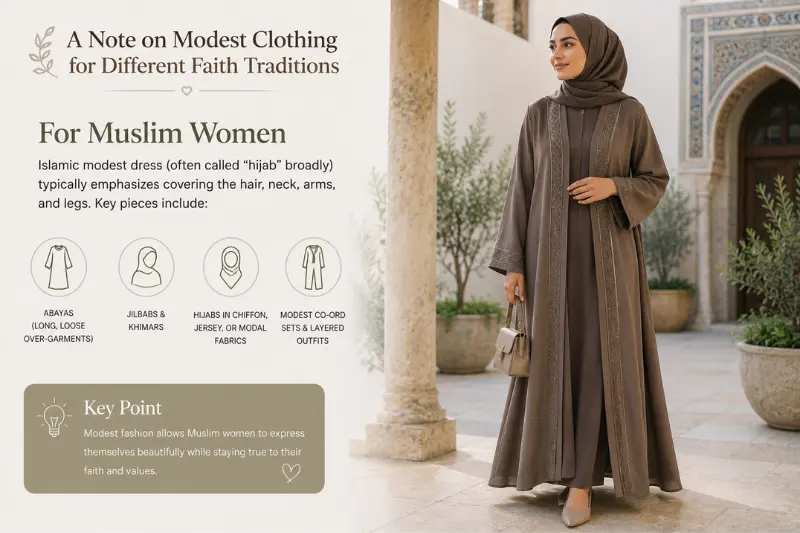
Islamic modest dress (often called “hijab” broadly) typically emphasizes covering the hair, neck, arms, and legs. Key pieces include:
- Abayas (long, loose over-garments)
- Jilbabs and khimars
- Hijabs in chiffon, jersey, or modal fabrics
- Modest co-ord sets and layered outfits
For Christian Women
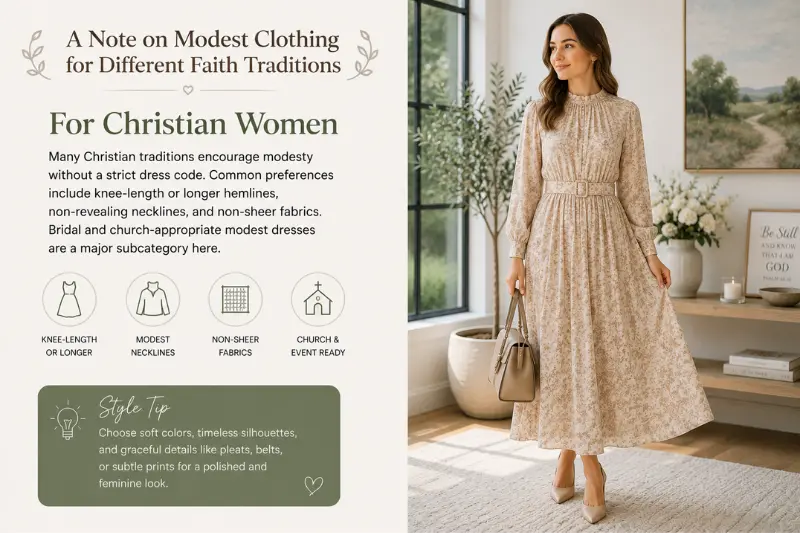
Many Christian traditions encourage modesty without a strict dress code. Common preferences include knee-length or longer hemlines, non-revealing necklines, and non-sheer fabrics. Bridal and church-appropriate modest dresses are a major subcategory here.
For Jewish Women
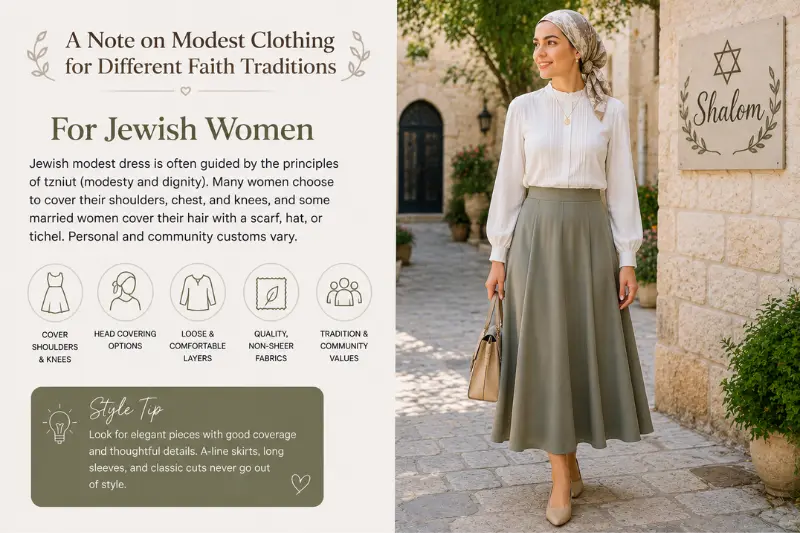
Orthodox and conservative Jewish dress standards (often called “tenuis”) typically call for elbows and knees covered, as well as hair covering for married women. Modest skirts, long sleeves, and structured silhouettes dominate.
For Non-Religious Modest Dressers
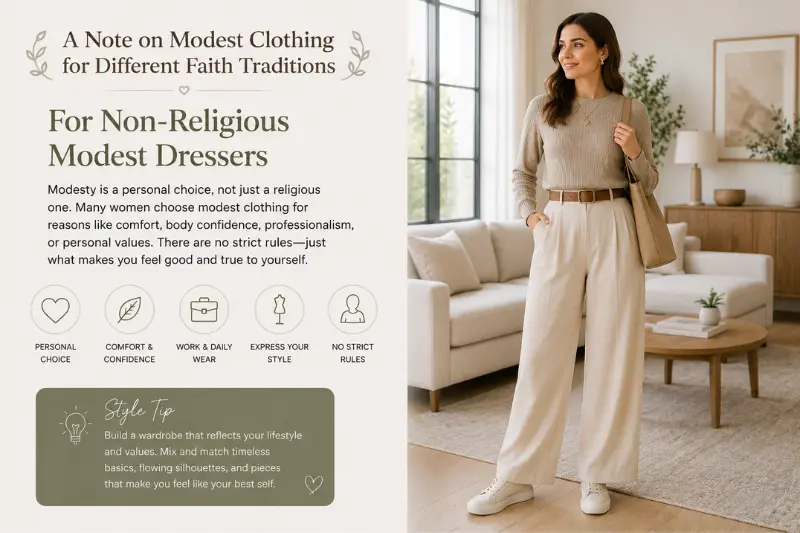
Modesty as a personal aesthetic has grown enormously outside religious circles. Many women simply prefer the elegance, practicality, and confidence that covered, relaxed dressing provides.
How to Shop for Modest Clothing Online (Without Getting Burned)
Online shopping for modest clothes comes with a few unique challenges. Here is how to shop smart:
Always check the model’s height.
If a dress hits mid-thigh on a 5’9″ model, it will likely be shorter on you. Look for brands that show multiple heights or offer tall/petite sizing.
Read the fabric description carefully.
Words like “soft,” “flowy,” and “breathable” are good. Watch for “lightweight” without a lining note — that often means sheer.
Check the return policy before you buy.
Modest fashion is highly fit-dependent. Shop with brands that offer at least 30-day returns or exchanges.
Look at customer photos, not just product photos.
Real customer images show you how a garment actually looks on a range of body types — and whether the fabric is as opaque as advertised.
Use size charts every time.
Modest brands often size conservatively (for coverage reasons). Do not assume your usual size; always measure and compare.
Frequently Asked Questions About Modest Clothing
Is modest clothing only for religious women?
No. Many women choose modest clothing for personal comfort, professional preference, or aesthetic reasons with no religious connection at all.
Does modest clothing have to be expensive?
Not at all. Many accessible brands offer well-made modest pieces at affordable prices. Focus on a few quality core pieces rather than a large quantity of fast-fashion items.
Can modest clothing be trendy and fashionable?
Absolutely. Modest fashion has moved fully into the mainstream. Linen sets, wide-leg trousers, midi skirts, and maxi dresses are all trending in mainstream fashion right now — and they are inherently modest.
What is the difference between modest and conservative clothing?
“Conservative” usually refers to professional or traditional styling choices. “Modest” specifically refers to coverage — less skin shown, longer hemlines, higher necklines. All conservative clothing is modest in coverage, but not all modest clothing is conservative in style.
How do I dress modestly in hot weather?
Choose lightweight, breathable fabrics like linen, cotton, and modal. Loose silhouettes allow airflow and actually keep you cooler than tight clothing. Lighter colors also help reflect heat.
Final Thoughts
Modest clothing is one of the most personal, meaningful, and versatile ways to dress. It cuts across cultures, faiths, body types, and budgets — and it continues to grow because it genuinely works for real women’s real lives.
The key is to build your wardrobe intentionally. Start with a few well-chosen core pieces, learn which fabrics and proportions work for your body, and shop from brands that understand what modest dressing actually means.